
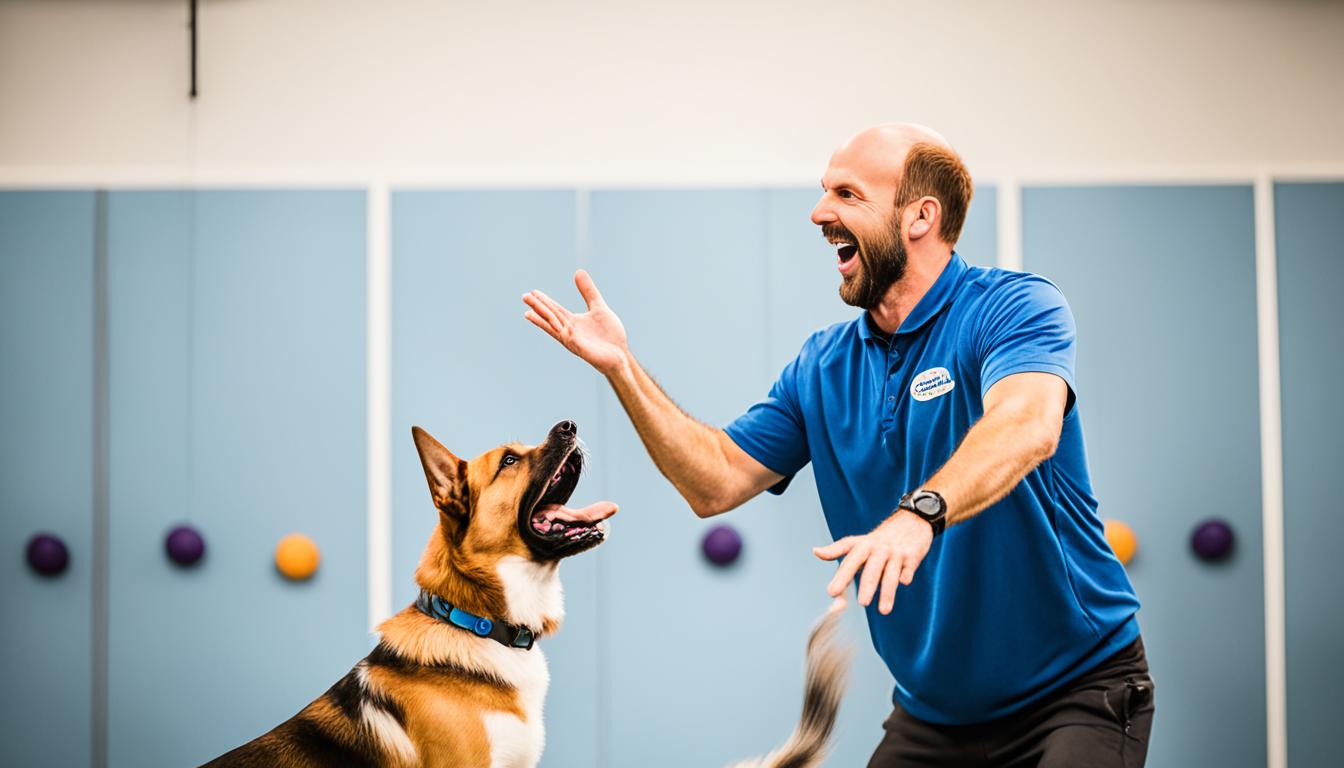
Have you ever thought about what makes the best dog training methods? The debate between positive reinforcement and traditional methods is ongoing. Both aim for behavior change but use different strategies.
We’re going to explore these two methods in detail. You’ll learn about positive reinforcement, rewarding your dog for good actions. We’ll also look at traditional methods, focusing on discipline for bad behavior. By comparing them, we hope to guide you to the best training approach for your dog. So, which method is the winner?
Quick Recommendation : Our blog is filled with tips , tricks, and methods for training your dog. If you are seeking a comprehensive training program, we recommend the K9 Training Institute.
Understanding Dog Training Methods
Exploring dog training means learning about different ways to teach your pet. Experts say each dog is unique, so one method won’t work for all. It’s important to know the details of each approach.

Dog training is all about the connection between you and your pet. There are two main types: positive reinforcement and traditional methods. Positive reinforcement uses rewards to encourage good behavior. Traditional methods might use corrections to stop bad behavior.
Experts in dog behavior have developed these methods to be effective and kind. Knowing these approaches helps you train better and builds a stronger bond with your dog. By understanding the different techniques, you can choose the best one for your pet. This ensures they learn and enjoy the training process.
The Science Behind Positive Reinforcement
Behaviorism in dog training is key to understanding how dogs learn and adjust to their world. Pioneers like B.F. Skinner played a big role in this. Skinner showed that actions followed by rewards tend to happen again. This is the main idea behind reward-based training.
Ivan Pavlov also made big contributions to animal training. His work on classical conditioning is still used today. Pavlov found that animals can link a neutral thing with a reward, which is key in reward-based training. These studies help us see why positive reinforcement works so well.
Studies prove that reward-based training boosts learning and improves the bond between you and your dog. Using treats, praise, or toys as rewards encourages good behavior in dogs. This method uses dogs’ natural desire for fun, making it a kind and effective way to train them.
The Fundamentals of Traditional Dog Training Methods
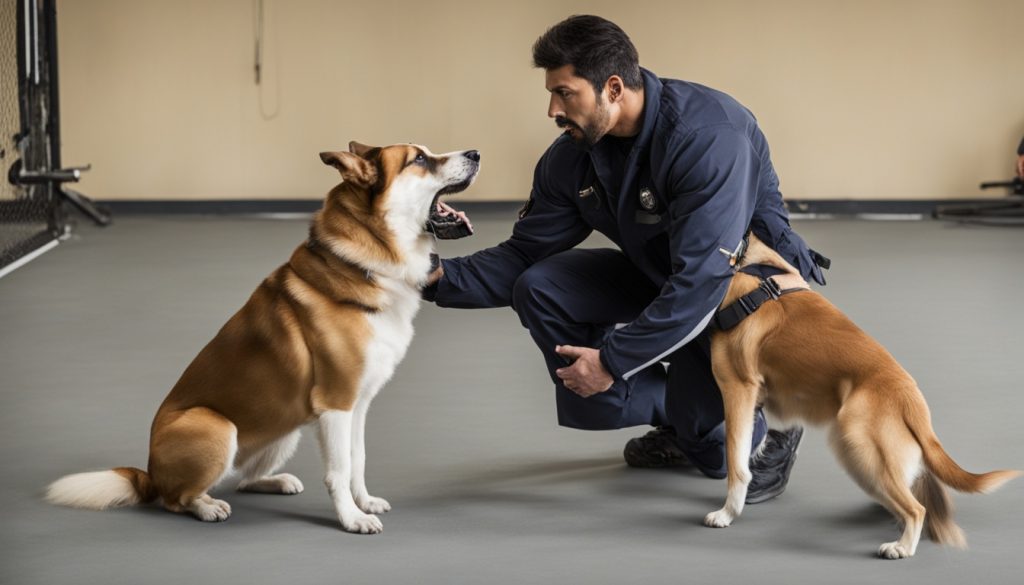
Traditional dog training has a long history, based on dominance. It sees the human as the “pack leader,” controlling and keeping order. This approach helps us understand its roots and how well it works.
Quick Recommendation : Our blog is filled with tips , tricks, and methods for training your dog. If you are seeking a comprehensive training program, we recommend the K9 Training Institute.
In the early 1900s, dominance-based training became popular. It was shaped by the history of classical dog training. This method used tools like leash corrections or harsh words to stop bad behavior. Trainers thought dogs needed a clear hierarchy to know their place in the “pack.”
This view on dog training shows how methods have changed over time. The focus was on quick obedience and discipline, sometimes using harsh tools. But as science showed us more, training methods changed. Now, we use a kinder, science-backed way to train dogs. Knowing where these old methods came from helps us see how training has evolved.
Pros and Cons of Positive Reinforcement
Positive reinforcement is a kind way to train dogs. It helps build a strong bond between you and your dog. By rewarding good behavior, your dog learns that good actions lead to positive results.

But, positive training has its limits. It’s great for encouraging good behavior but might not work for serious issues. Some owners find treats and praise aren’t enough to fix tough behaviors. They need a more balanced approach to training.
Adding a balanced training philosophy can fill in where positive reinforcement alone falls short. Mixing reward-based training with other methods makes training effective and kind. This approach helps you tackle your dog’s challenges while keeping the benefits of reward-based training.
Pros and Cons of Traditional Dog Training Methods
The debate over dominance training has been going on for years. Many trainers believe that some traditional methods work well. They set clear boundaries, helping dogs understand their place in a family. This can lead to better discipline and balance in dogs.
But, it’s key to look at the downsides of traditional training. Critics say it can stress dogs out. This stress might not be good for their mental health.
Some say dominance training works fast and effectively. It can help dogs behave better right away. Techniques like leash corrections or stern commands can make dogs listen quicker.
This approach is attractive for owners who want quick fixes. Supporters believe it mirrors the natural order in the wild.
But, animal behaviorists have their concerns. They think using fear or discomfort to train can cause problems later. These problems include anxiety, aggression, or a dog not trusting its owner.
They say discipline should be balanced and based on understanding and cooperation, not just punishment.
Even though dominance training has its benefits, research points to positive reinforcement as a better choice. It’s more consistent and kinder to dogs. So, it’s important to think about the pros and cons of traditional training. Consider how it affects your relationship with your pet in the long run.
Training Tools and Equipment
Choosing the right tools is key to effective dog training. The clicker is a popular aid that makes a clear sound to mark good behavior. Using it with treats makes learning fun for your dog.
It’s important to pick the right collars and harnesses. A standard collar is good for daily wear, but training gear is better for teaching new skills. Make sure to choose humane options that don’t hurt your dog.
Using a mix of tools can help with training. Puzzle toys and treat-dispensing devices keep your dog’s mind sharp. They help with problem-solving and stop boredom.
Don’t forget about verbal cues and hand signals in training. Being consistent with these, along with humane tools, makes training better for everyone.
The aim is to train in a way that’s good for your dog and gets the results you want. By picking the right gear, you make training kind and effective for you and your dog.
Case Studies: Positive Reinforcement vs. Traditional Dog Training Methods: Which is Best?
Looking at real-life training, we see how positive reinforcement beats traditional methods. Take Max, a German Shepherd who was aggressive towards strangers. With positive reinforcement, he learned to see new people as friends, reducing his aggression. This shows how positive reinforcement can change a dog’s behavior for the better.
Then there’s Bella, a Labrador Retriever trained with old-school methods. She followed commands at first but still had behavioral issues. This shows that traditional training can only go so far in solving deep problems.
Daisy, a lively Border Collie, was another story. Her trainers used a mix of methods, including positive reinforcement. This approach helped manage her energy and improve her focus. It shows that combining different training styles can lead to lasting changes.
These stories prove that positive reinforcement is key for complex behavioral issues. By looking at real training examples, we see that building positive habits leads to better behavior in dogs.
Quick Recommendation : Our blog is filled with tips , tricks, and methods for training your dog. If you are seeking a comprehensive training program, we recommend the K9 Training Institute.
Finding the Right Method for Your Dog
Choosing the best training method for your dog means knowing what they need and who they are. Every dog is different, so what works for one might not work for another. Creating a training plan just for your dog can make a big difference.
It’s important to adjust your training based on your dog’s personality. If your dog is very energetic or very calm, you’ll need to change how you train them. This can really help your dog learn better.
Being flexible with your training methods is key. Some dogs do well with positive reinforcement, while others need a mix of old-school and reward-based methods. Watch how your dog reacts to different approaches to find what works best for them.
Talking to a professional dog trainer can also be very helpful. They can create a training plan that fits your dog’s specific needs. This ensures your dog learns in a way that makes them happy and comfortable. Always keep your dog’s happiness and comfort in mind as you try different training methods.
Combining Positive Reinforcement and Traditional Methods
Finding the right mix of training techniques for your dog can be tough. Exploring blended approaches might show that combining positive reinforcement and traditional methods works well. This mix meets your dog’s specific needs, offering rewards and discipline for good behavior.
Hybrid dog training takes the best from both sides. It uses positive reinforcement for good actions and traditional methods for setting limits. This way, you reward your dog with treats or praise and correct them when needed. This smart mix ensures your dog gets a well-rounded training.
Blended training is also flexible for different situations. Sometimes, just positive reinforcement isn’t enough for a disobedient dog. But using only traditional methods can bore your pet. Together, these methods make training fun and effective.
Every dog is different, so finding the right hybrid training mix might take some time. Watch how your dog reacts to different methods to improve your approach. Getting advice from a professional trainer can also help. By mixing positive reinforcement with traditional methods, you’ll likely have a happy and well-trained dog.
Conclusion
This journey through different dog training methods has given you a clear view on the best practices. Positive reinforcement is a gentle and effective way to encourage good behavior in your dog. Traditional methods, though still used, often don’t match modern, kinder practices.
Not every method fits every dog, so it’s key to think about your dog’s personality and needs. By looking at the pros and cons, you can make choices that help you and your dog. Whether you use treats and praise or a mix of methods, being patient and consistent is important for the best results.
The main aim is to have well-behaved, happy dogs that do well. By choosing a training method that fits you and your dog, you’re starting a strong and rewarding relationship. The best training is about respect, trust, and a deep bond with your pet.
Quick Recommendation : Our blog is filled with tips , tricks, and methods for training your dog. If you are seeking a comprehensive training program, we recommend the K9 Training Institute.