

Ever thought about making your home a peaceful place for you and your dog? Setting clear rules is key for your pet’s happiness and your family’s safety. Teaching your dog to respect these rules can make your home safer and more loving.
In this guide, we’ll dive into why boundary training matters. We’ll also cover the tools you need and how to teach your dog to respect your home’s rules. Get ready to strengthen your bond with your furry friend!
Understanding Why Dogs Need Clear Boundaries at Home
As a dog owner, you might have seen your pet’s need for structure at home. This isn’t just about following rules. It’s about their pack mentality and psychology. Setting clear boundaries gives your pet security and meets their natural instincts.
Dogs in the wild live in packs with clear roles. As a pet, your dog sees you as their leader. They want the same order and predictability they had in the wild. When you set and stick to boundaries, your dog feels safe and happy at home.
Quick Recommendation : Our blog is filled with tips , tricks, and methods for training your dog. If you would like to attend a Free Dog Training Workshop, we recommend the K9 Training Institute , give it a try.
The structure of your home is also key to your dog’s happiness. By setting off-limits areas, you teach your dog their place. This helps avoid bad behaviors like chewing or jumping. It also strengthens your bond with your pet.
Getting why dogs need boundaries is the first step to a peaceful home. By meeting their instinctual and psychological needs, you build trust and understanding. This benefits both you and your dog.
Essential Tools and Equipment for Boundary Training
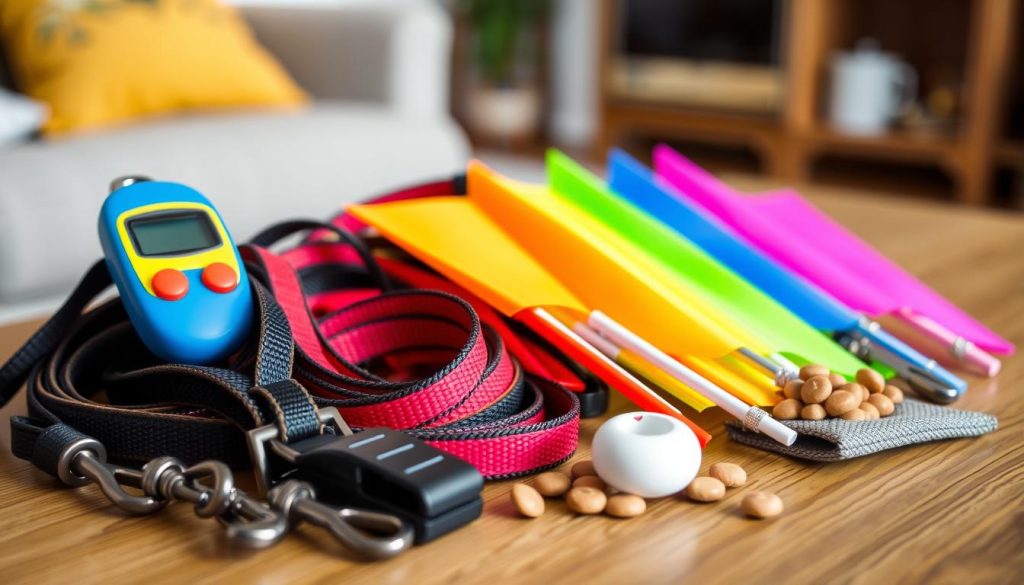
Setting clear boundaries is key when training your dog. You’ll need some important tools and equipment. Start with strong pet gates to keep your pup out of certain areas. Long leashes help guide your dog and teach them where to go.
Clickers are great for positive reinforcement. Click the clicker when your dog does what you want, like staying in a space. Then, give them a treat. Treat pouches make it easy to carry rewards during training.
Quick Recommendation : Our blog is filled with tips , tricks, and methods for training your dog. If you would like to attend a Free Dog Training Workshop, we recommend the K9 Training Institute , give it a try.
Items like non-slip mats or playpens can also help. They create safe zones in your home. Introduce these tools slowly and always praise and reward your pup. This helps them learn and respect the boundaries.
Starting with Basic Room Restrictions
Training your dog to respect home boundaries starts with basic room restrictions. This method helps your dog know which areas are off-limits. It also shows them where they can go freely. By setting clear boundaries, you create a peaceful home for everyone.
First, pick areas you want to keep dog-free, like the bedroom or formal living room. Make sure your dog knows these places are off-limits. Reward them with treats when they stay out of these areas. This positive approach helps them learn the rules.
As your dog gets used to these rules, you can let them into more areas. This slow learning process avoids stress and confusion. It’s important that everyone in the family follows the same rules. This keeps the training consistent and effective.
Starting with basic room restrictions and using positive reinforcement teaches your dog respect. This is the first step to a well-structured home. It makes living together easier and more enjoyable for both you and your dog.
Training a Dog to Respect Boundaries in the Home
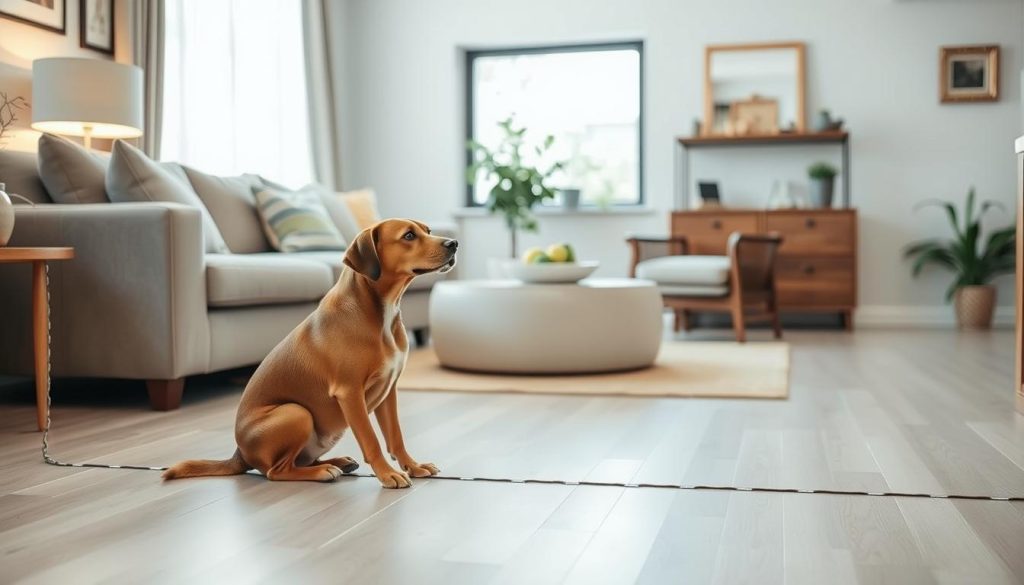
Setting clear boundaries is key for your dog’s happiness and your home’s peace. Use positive reinforcement to teach your dog where they can and can’t go. Start by setting up “invisible lines” around rooms or areas you want to restrict, using positive reinforcement when your dog respects these boundaries.
Threshold training is another great way. Reward your dog for pausing before crossing a doorway or threshold. This teaches them that some areas are off-limits. Use commands like “stay” or “go to your mat” to guide them. Place their bed or mat in a specific spot to help them understand where they belong.
Boundary training needs time and patience. Stay calm and consistent, and avoid scolding or punishing your dog for mistakes. Instead, gently guide them back on track and reward their good behavior. With these techniques, your dog will feel safe and happy in your home.
Positive Reinforcement Techniques for Space Management
Effective dog training is all about positive reinforcement. Teaching your dog to respect home boundaries works best with rewards. Treats, praise, and clicker training are great tools for this.
Give your dog a treat or praise them right when they obey. Being consistent is key. Reward them every time they stay in their place or avoid crossing a room boundary. This makes them want to do it again.
Clicker training is also great for teaching boundaries. The click sound tells your dog they did something right. Then, you give them a treat. This way, they learn to associate the click with a reward.
Consistency is key with positive reinforcement. Reward your dog every time they show the right behavior. They’ll learn that respecting boundaries is good. With patience and effort, your dog will learn to manage space well.
Addressing Common Boundary-Breaking Behaviors
Setting clear boundaries in your home can face some challenges. Door darting, counter surfing, and furniture jumping are common issues. But, with the right approach, you can teach your dog to respect these limits.
Door darting is dangerous and can be stopped by teaching your dog to “sit and stay” near doors. Reward them for staying put. Counter surfing can be prevented by keeping food out of reach and offering snacks in safe spots. Furniture jumping can be managed by teaching your dog to stay on the floor when you’re relaxing.
Using redirection techniques consistently and positively will help your dog learn the boundaries. With patience, your dog will know where they can and can’t go in your home.
Teaching “Place” and “Stay” Commands
Teaching your dog the “place” and “stay” commands is key in obedience training. These commands help set clear rules in your home. They also improve your dog’s impulse control and ability to stay focused for longer periods.
Start by picking a spot, like a dog bed or mat, for your dog to go to. Give them treats and praise when they stay there. As they get better, make them stay longer before letting them go. This helps them learn to control their impulses and stay put, even when there’s something else to look at.
Adding the “stay” command to your training makes your dog understand boundaries better. Start by having them stay in a sitting or lying position. Then, slowly move further away from them. Always reward them with treats and affection when they do well.
Learning the “place” and “stay” commands helps your dog respect your home’s rules. This leads to a better and more harmonious relationship. These commands are useful in many situations, like keeping your dog out of places they shouldn’t be or ensuring their safety at gatherings.
Maintaining Boundaries with Multiple Pets
Living with multiple pets can be a fun challenge. You need to set clear rules for your dog and think about how your pets interact. It’s important to train each pet separately and have the same rules for everyone.
Training each pet differently is key. What works for one dog might not work for another. Learn what makes each pet special and train them in a way that fits their personality. This helps everyone respect the rules and live together peacefully.
Having the same rules for all pets is vital. Make sure everyone, including your pets, knows what’s expected. This keeps conflicts down and makes for a happy home for all.
By focusing on pet dynamics and individual training, you can manage a multi-pet household well. With patience and creativity, you can set and keep the boundaries that make your pets happy and safe.
Conclusion
Congratulations on starting your journey to a peaceful home with your dog. Setting clear rules is key for a happy dog and a stronger bond between you. It’s a big part of being a good dog owner.
Boundary training takes time, patience, and a positive approach. Keep up the good work and you’ll see your efforts pay off. This will make your home a happier place for everyone.
Be ready for challenges and celebrate small wins. As you teach your dog, they’ll learn to respect your rules. This will make your home a stress-free place for both of you. The training you do will also make your relationship with your dog stronger and more trusting.
Quick Recommendation : Our blog is filled with tips , tricks, and methods for training your dog. If you would like to attend a Free Dog Training Workshop, we recommend the K9 Training Institute , give it a try.