
Are you tired of chaotic dog walks where your furry friend pulls you in every direction? Imagine strolling through the park with your dog by your side, enjoying the scenery without the stress of being pulled.
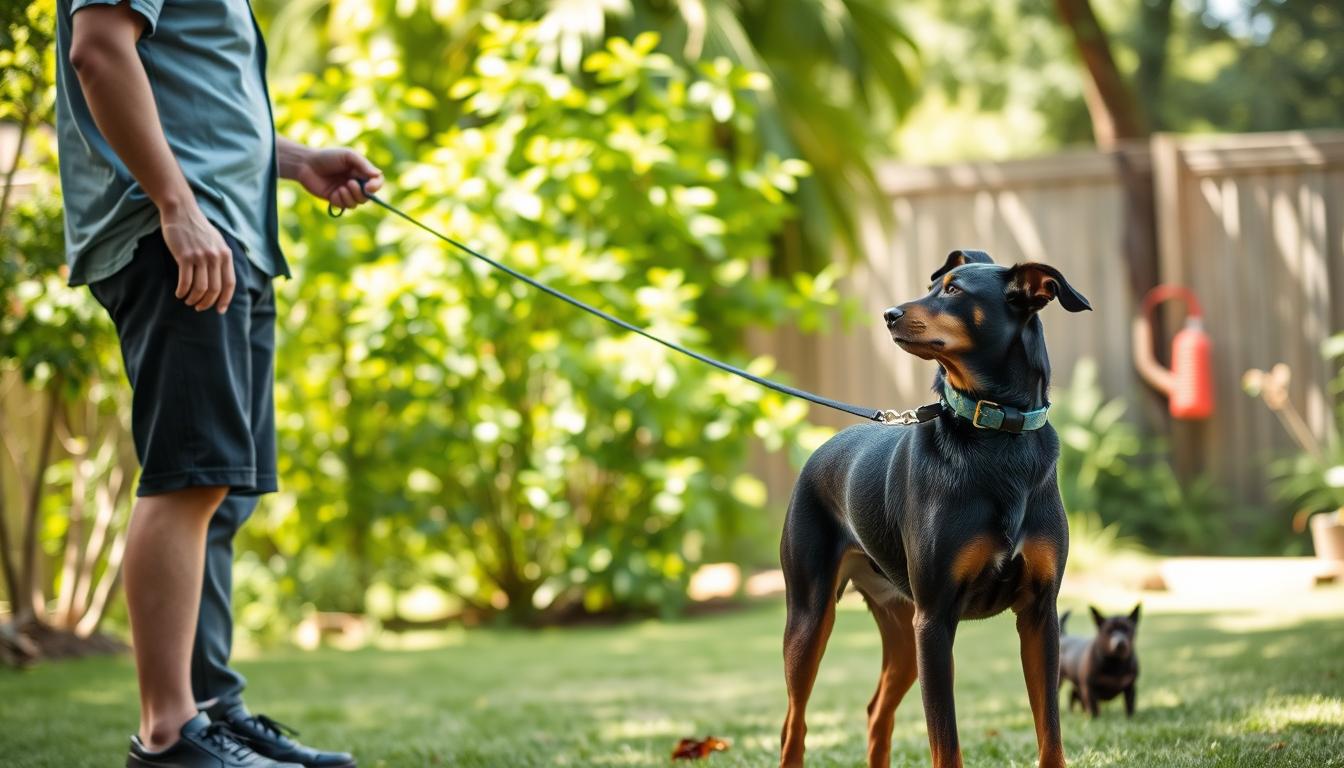 dog training techniques can transform walks into enjoyable experiences. With the right approach, you can achieve calm, controlled walks, strengthening your bond with your dog.
Easy leash walking is about creating a harmonious walking experience. It’s not just about having a well-behaved dog; it’s about enjoying quality time together. This article will guide you through the process, providing you with the necessary tools and knowledge.
Why Dogs Pull on Leashes and How It Affects Your Walks
To achieve loose leash walking, it’s vital to understand the motivations behind your dog’s pulling behavior. Dogs pull on leashes for various reasons, including instinct, excitement, and lack of training. Understanding these reasons is crucial to addressing the behavior effectively.

One of the primary reasons dogs pull on leashes is due to their instinctual nature. Dogs are naturally inclined to explore their surroundings and follow their noses, which can lead to pulling on the leash. This instinctual behavior is deeply rooted and can be triggered by various stimuli, including other animals, interesting smells, or the desire to investigate new environments.
Moreover, dogs may pull due to excitement or eagerness to move forward, which can be caused by the presence of other dogs, people, or engaging activities. Recognizing these triggers is essential to managing and eventually correcting the pulling behavior.
By acknowledging the instinctual reasons behind your dog’s pulling, you can begin to develop strategies to mitigate this behavior, leading to more enjoyable and stress-free walks. Loose leash walking is achievable when you understand and address the underlying causes of pulling.
Essential Equipment for Easy Leash Walking Success
To achieve easy leash walking, it’s crucial to start with the right equipment. The type of leash and collar you use can significantly impact your dog’s behavior during walks. With various options available, choosing the right gear can make a substantial difference in your dog walking experience.
One of the most recommended pieces of equipment for easy leash walking is a harness. Unlike traditional collars, harnesses distribute the force across the dog’s chest and shoulders, making walks more comfortable for your pet. This is particularly beneficial for dogs that tend to pull on the leash, as it reduces strain on their neck.

When selecting a leash, consider the material, length, and durability. Retractable leashes offer flexibility, but some trainers advise against them for training purposes as they can encourage pulling. A standard 4-6 foot leash is often ideal for training walks, providing enough space for your dog to walk beside you without getting too close to distractions.
For pet obedience, it’s also essential to choose a collar or harness that your dog is comfortable wearing. Some dogs may prefer the feeling of a harness over a collar, while others might be indifferent. Observing your dog’s comfort and reaction to different types of equipment is key to making the right choice.
In conclusion, the right equipment is foundational to easy leash walking success. By choosing a comfortable harness and an appropriate leash, you can significantly improve your dog walking experience, making it more enjoyable for both you and your pet.
Preparing Your Dog for Easy Leash Walking Training
Preparing your dog for leash walking training is a vital step towards achieving calm, controlled walks. This process involves creating an environment conducive to learning and ensuring your dog is comfortable with the walking equipment.
To start, it’s essential to understand your dog’s current behavior and identify areas that need improvement. By doing so, you can tailor the training to address specific issues, making the process more effective.
One of the first steps in preparing your dog is to introduce them to the leash and collar or harness gradually. Allow your dog to become familiar with the equipment at their own pace, making it a positive experience with treats and praise.
Additionally, choosing the right time and place for training is crucial. Begin in a quiet, distraction-free area where your dog can focus on you. As training progresses, you can gradually introduce more distractions to simulate real-world walking conditions.
By laying the groundwork properly, you set the stage for successful easy leash walking training. This preparation not only makes the training process smoother but also strengthens the bond between you and your dog.
The Fundamentals of Easy Leash Walking Techniques
To achieve calm, controlled walks, it’s essential to grasp the fundamentals of easy leash walking techniques. Easy leash walking is built around basic commands and signals that help communicate with your dog during walks. By understanding and applying these techniques, you can significantly enhance the walking experience, making it more enjoyable and less stressful for both you and your dog.
One of the core aspects of easy leash walking is the use of verbal cues and hand signals. These tools are essential in dog training, allowing you to guide your dog without pulling on the leash. Positive reinforcement is a key aspect of these techniques, encouraging good behavior through rewards.
Verbal Cues and Hand Signals
Verbal cues are verbal commands that instruct your dog to perform a specific action, such as “walk,” “stop,” or “heel.” Consistency is key when using verbal cues; ensure that you use the same commands in the same context to avoid confusing your dog. Hand signals, on the other hand, provide a visual cue that can be used in conjunction with verbal commands or independently, especially in noisy environments where verbal cues might not be heard.
To effectively use verbal cues and hand signals, start by introducing them in a controlled environment. Begin with simple commands and gradually increase the complexity as your dog becomes more responsive. Reward your dog with treats, praise, or playtime when they respond correctly to a cue. This positive reinforcement will help solidify the desired behavior, making your walks more enjoyable.
By mastering the fundamentals of easy leash walking techniques, including the effective use of verbal cues and hand signals, you can achieve a more harmonious and enjoyable walking experience with your dog. This not only strengthens your bond but also contributes to a more controlled and stress-free walk.
Positive Reinforcement Strategies for Easy Leash Walking
The key to successful leash walking lies in the effective application of positive reinforcement strategies. Positive reinforcement is a powerful tool in dog training, encouraging desired behaviors by associating them with rewards.
When it comes to leash walking, positive reinforcement can be applied in various ways. One of the most effective methods is using treats. By offering treats when your dog walks beside you without pulling on the leash, you reinforce the desired behavior. Over time, your dog will learn to associate walking calmly on a leash with the reward, making them more likely to repeat the behavior.
Praise is another valuable form of positive reinforcement. Dogs often respond well to verbal praise and affection, which can be used alongside treats to reinforce good leash manners. Consistency is crucial; ensure that you praise or reward your dog every time they exhibit the desired behavior, especially during the initial stages of training.
In addition to treats and praise, play can also be a useful positive reinforcement tool. For dogs that are highly motivated by play, incorporating a favorite toy or game into your training can be highly effective. For example, after a short walk where your dog has maintained good leash manners, you can stop and play with them, reinforcing the good behavior.
Implementing Positive Reinforcement Effectively
To get the most out of positive reinforcement strategies, it’s essential to implement them consistently and correctly. Start by identifying what motivates your dog the most, whether it’s treats, praise, or play, and use these motivators to reward good behavior.
Be sure to reward your dog the moment they exhibit the desired behavior, as this helps them make a clear connection between the action and the reward. As your dog becomes more reliable on the leash, you can gradually phase out the rewards, replacing them with occasional praise or treats to maintain the behavior.
By applying positive reinforcement strategies consistently and effectively, you can achieve easy leash walking with your dog, making your walks together more enjoyable and stress-free.
Troubleshooting Common Leash Walking Challenges
Despite thorough preparation, distractions during walks can quickly turn a calm dog into a pulling, lunging companion. Troubleshooting these challenges requires patience and a deep understanding of your dog’s behavior.
Quick Recommendation : If you would like to attend a Free Online Dog Training Workshop, we recommend the K9 Training Institute , give it a try.
Dealing with Distractions
Distractions are a significant challenge during leash walking. Other dogs, people, and interesting smells can trigger pulling and lunging. To address this, it’s essential to teach your dog to focus on you despite distractions.
One effective strategy is to practice loose leash walking in various environments with different distractions. Reward your dog for maintaining a loose leash, reinforcing good behavior.
In addition to environmental changes, verbal cues and rewards can help manage distractions. By consistently reinforcing desired behaviors, you can improve your dog’s ability to walk calmly on a leash.
Consistency and patience are key. Over time, your dog will learn to navigate distractions, leading to more enjoyable walks for both of you.
Advanced Techniques for Perfect Leash Manners
Once your dog has mastered the basics, it’s time to introduce more complex walking techniques. Advanced training involves teaching your dog to respond to complex commands and nuanced stimuli, ensuring they remain well-behaved in challenging situations.
To refine your dog’s walking skills, consider incorporating varied terrain and distractions into your training sessions. This could include walking on different surfaces, such as pavement, grass, or trails, and introducing distractions like other dogs, people, or loud noises.
Another advanced technique is to practice “look” or “watch me” commands during walks, helping your dog focus on you despite distractions. You can also work on loose-leash walking in busy areas, rewarding your dog for remaining by your side.
By gradually increasing the difficulty of your training sessions and consistently reinforcing good behavior, you can achieve perfect leash manners. This not only enhances your walking experience but also strengthens the bond between you and your dog.
Maintaining Progress and Preventing Regression
The journey to stress-free walks doesn’t end with initial training; it requires consistent reinforcement. Maintaining good leash manners is an ongoing process that involves regular practice and positive reinforcement.
To keep your dog walking nicely on a leash, it’s essential to continue training and reinforcing previously learned behaviors. This can be achieved by incorporating dog walking tips into your daily routine, such as practicing loose-leash walking in various environments and around different distractions.
Easy leash walking is a skill that needs to be reinforced regularly to prevent regression. By staying committed to training and being mindful of your dog’s responses to different situations, you can enjoy long-term success in easy leash walking.
Consistency is key to maintaining the progress you’ve made. Regular practice, even if it’s just for a few minutes a day, will help solidify good leash manners and prevent your dog from reverting to old habits.
By following these dog walking tips and staying committed to easy leash walking training, you can enjoy stress-free walks with your dog for years to come.
Conclusion: Enjoying the Benefits of Stress-Free Walks
Achieving easy leash walking is a significant accomplishment that leads to more enjoyable and stress-free walks with your dog. By applying the techniques and strategies outlined in this article, you can transform your walking experience.
Consistent dog training and positive reinforcement are key to success. As you continue on your easy leash walking journey, you’ll strengthen your bond with your dog and enjoy the many benefits that come with it, including a more relaxed and enjoyable walking experience.
With patience and persistence, you can overcome common leash walking challenges and develop a more harmonious walking routine. By doing so, you’ll create a more enjoyable experience for both you and your dog.
Quick Recommendation : If you would like to attend a Free Online Dog Training Workshop, we recommend the K9 Training Institute , give it a try.