

Are you and your dog ready for dog agility competitions? Let’s unleash your pup’s full potential and become a top team on the course! This guide will show you the key techniques and training strategies to make your dog an agility superstar.
Learn the basics of agility training and the skills for top competition. This article is packed with everything you need to succeed. Whether you’re experienced or new, you’ll find the tips to dominate the agility circuit. So, are you ready to unleash your dog’s true potential and conquer the agility course? Let’s dive in!
Understanding the Basics of Agility Training
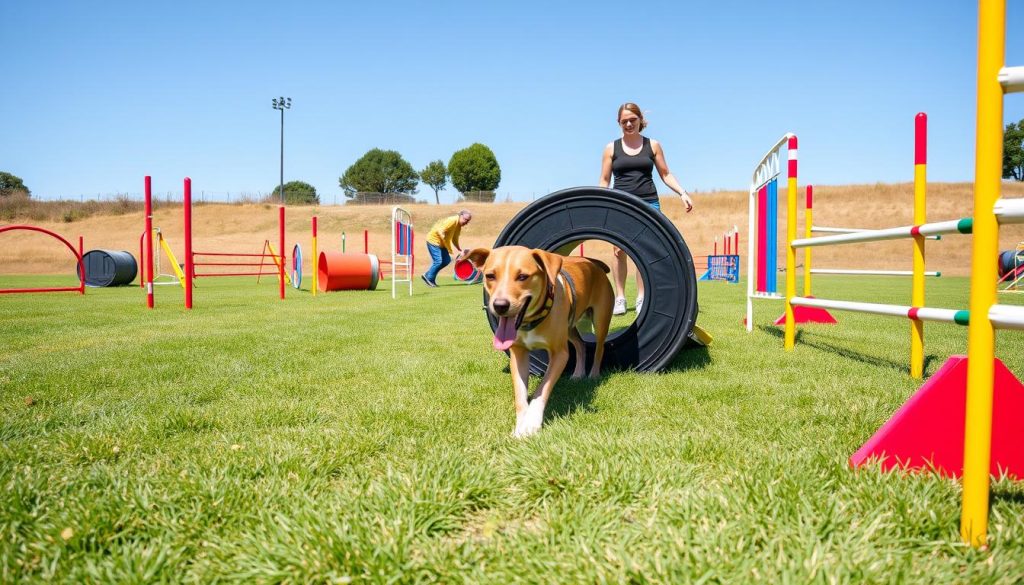
Are you excited about dog agility? You’re in the right spot! Agility training is a great way to bond with your dog. It also keeps them physically and mentally sharp. At its heart, agility training for dogs teaches them to run through obstacles in a set time.
The agility training basics help improve your dog’s coordination and speed. They’ll learn to jump over hurdles and navigate through poles. This keeps them active and prevents boredom and bad behavior.
The dog agility training fundamentals are key for you and your dog. As the handler, you’ll learn to guide your dog through the course. This strengthens your bond and builds trust.
Quick Recommendation : Our blog is filled with tips , tricks, and methods for training your dog. If you would like to attend the Free Dog Training Workshop, we recommend the K9 Training Institute.
Any dog can enjoy agility training for dogs, no matter their breed or age. It’s a fun way to challenge your dog and strengthen your bond. Start learning the basics and watch your dog grow more confident and skilled!
Choosing the Right Dog for Agility Competitions
Not all dogs are good for agility competitions. Some breeds have the right body and mind for it. Knowing what makes a dog great for agility is key.
The best dog breeds for agility are athletic, smart, and easy to train. Border Collies, Australian Shepherds, and Shetland Sheepdogs are often at the top. They have lots of energy, solve problems well, and love to please. The size and build of a dog also matter, as some courses are better for smaller or larger dogs.
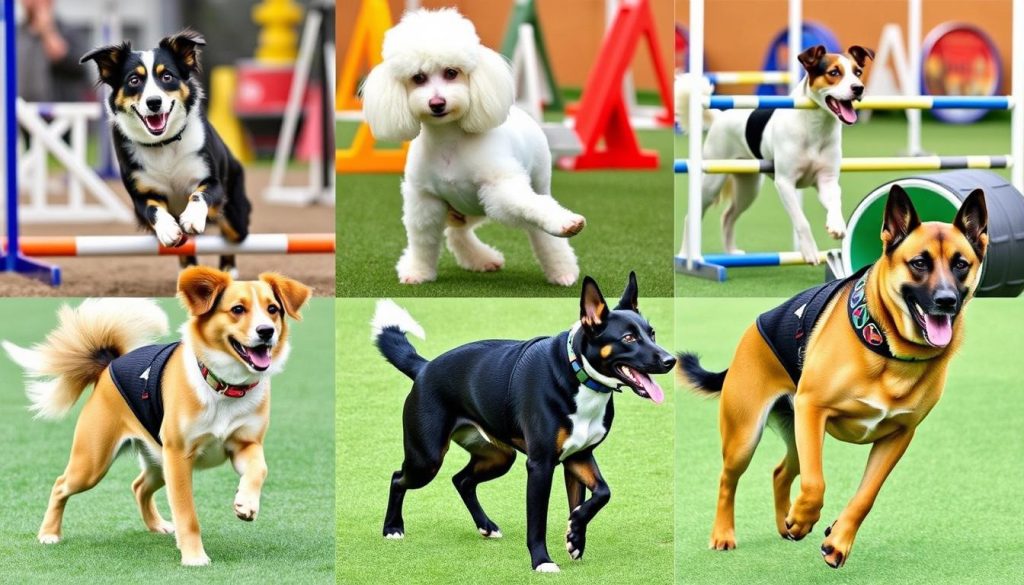
Look at a dog’s agility, speed, and coordination when choosing. Labradors and Golden Retrievers are athletic but might not focus well on tough courses. Herding breeds like Welsh Corgis and Miniature Schnauzers are great at obstacles because they’re smart and quick to learn.
Knowing what each breed is good at helps you pick the right dog for agility. With the right breed and training, you and your dog can do well in agility competitions.
Essential Equipment for Agility Training
Agility training needs the right gear for your dog’s safety and success. Whether at home or a training facility, quality equipment is key. You’ll need everything from contact obstacles to weave poles to help your dog shine.
Contact obstacles like A-frames and dog walks are vital. They teach your dog to handle different surfaces and heights. Weave poles also play a big role, testing your dog’s speed and precision.
Don’t forget jumps, tunnels, and hoops as part of your gear. They improve your dog’s agility and skills. Make sure to pick durable, high-quality equipment for training and competitions.
Getting the right equipment is a big step for your dog’s agility journey. With the right tools, you and your dog can master agility training together.
Building a Strong Foundation
Starting your dog’s agility journey with a solid foundation is key. Learning basic obedience commands and boosting your dog’s confidence are crucial. These steps are the first steps to agility success.
But there’s more. Socializing your dog in different places is also important. It helps them get used to new things, which is great for agility. This makes them more adaptable and resilient.
The groundwork you lay now will help your dog succeed later. With patience and consistency, you’ll build a strong bond. This bond will prepare your dog for any agility challenge.
Quick Recommendation : Our blog is filled with tips , tricks, and methods for training your dog. If you would like to attend the Free Dog Training Workshop, we recommend the K9 Training Institute.
How to Train Your Dog for Agility Competitions
Agility training is a fun way to bond with your dog and improve their speed and focus. Start by introducing them to obstacles like jumps and tunnels. Use positive reinforcement to help them learn.
Use treats and praise to reward your dog for completing obstacles. This keeps them engaged and excited. Remember, it’s all about making it fun for your dog.
As your dog gets better, work on their speed and precision. Use timed drills and obstacle courses to help. Reward them with treats and affection as they progress.
By using different training techniques, your dog will get faster and more precise. With patience and a positive attitude, you and your dog can do great in agility competitions.
Handling Techniques for Agility Courses
Learning how to handle your dog in agility courses is key. You and your dog must work together well. This means clear communication and knowing how to position yourselves.
Using body cues is a big part of agility handling. By moving your body, you tell your dog where to go. This helps your dog follow you better, making your team stronger.
It’s also important to understand your dog’s body language. This way, you can adjust your handling to meet their needs. This improves your teamwork and helps you make quick decisions on the course.
Getting good at agility handling and building a strong bond with your dog are crucial. With practice, you and your dog can tackle even the toughest courses. You’ll do it with style and a shared love for the sport.
Maintaining Fitness and Preventing Injuries
Keeping your agility dog in top shape is key for success. Create a detailed training plan to keep your dog fit. Also, learn how to avoid and treat common injuries.
Warm-ups and cool-downs are vital to avoid injuries. Add activities like swimming, hiking, and strength training to boost fitness. Regular vet visits can spot problems early.
Focus on your dog’s health to keep them injury-free. With the right care, your dog will stay in great shape for agility events. This way, you can prevent injuries and keep your dog performing well for years.
Competing in Agility Trials
The ultimate goal of your agility training is to show off your dog’s skills in trials. Preparation is crucial for a successful and fun experience for both you and your dog. Start by looking for and signing up for local agility events. Make sure they match your dog’s skill level and readiness.
Practice is key for agility competition preparation. Practice in a trial-like setting during your training. Work on managing your nerves and your dog’s. Use deep breathing and positive self-talk to stay calm and focused.
On competition day, arrive early to help your dog get used to the new place. Learn the course layout and rules well. Warm up your dog right before you go on. Trust your training and enjoy the moment, win or lose. Celebrate your achievements and use feedback to improve your skills.
Conclusion
As you finish this guide on training your dog for agility, think about how far you’ve come. You’ve learned the basics of agility training and picked the right gear. You’ve also mastered how to handle your dog during competitions.
This guide taught you the importance of a strong start, keeping your dog fit, and improving your handling. Agility training is a journey, not a one-time event. The more you practice and compete, the better your dog will do.
Now, think about what’s next for you and your dog in agility. Maybe you’ll enter local or regional trials, or just enjoy the sport together. The skills you’ve learned will help you no matter what. Enjoy the ups and downs, and your bond with your dog will keep growing.
Quick Recommendation : Our blog is filled with tips , tricks, and methods for training your dog. If you would like to attend the Free Dog Training Workshop, we recommend the K9 Training Institute.