

Have you ever wondered what it takes to train a dog to become a hero during disasters?
Training a search and rescue dog is more than just teaching them to obey. It’s about making them ready for tough situations. They learn to find missing people in bad weather and hard-to-reach places. This training is tough and needs a lot of effort from both the dog and the handler.
Learning about search and rescue dogs means looking at what groups like FEMA and NASAR say. They show how important these dogs are in emergencies. The American Kennel Club also talks about how obedience and agility are key for these dogs.
Before we get into the training, let’s see why these dogs are so crucial in disasters.
Why Search and Rescue Work is Important
Search and rescue (SAR) work is vital in disaster response efforts. It ensures lives are saved during emergency search operations. When natural disasters like earthquakes and floods hit, every second is crucial.
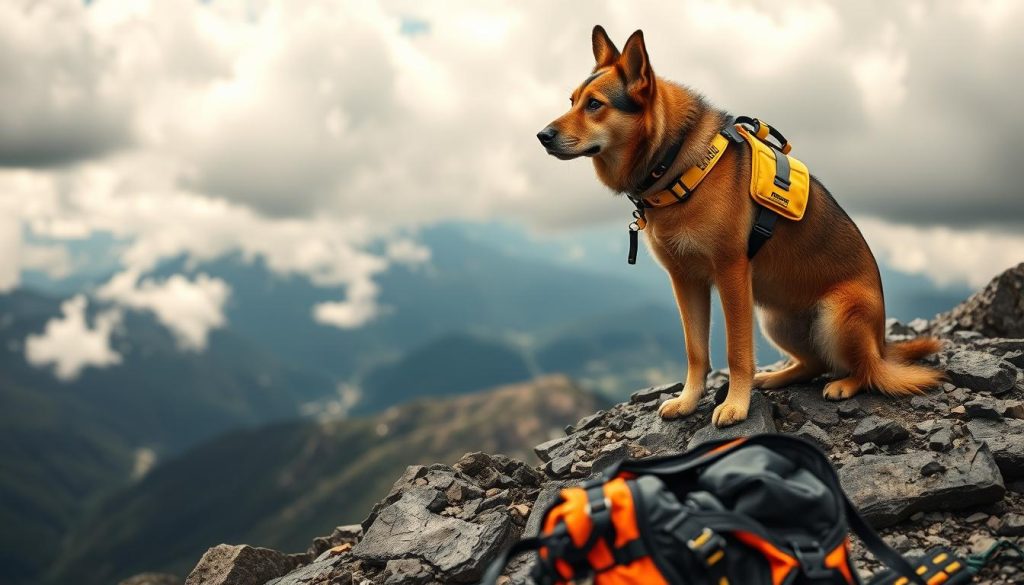
This is where SAR dogs, or lifesaving canines, play a key role. These dogs are highly trained. They have heightened senses, speed, and agility.
Their keen sense of smell can find human scent over vast areas and under tough conditions. Organizations like the International Search and Rescue Advisory Group (INSARAG) highlight their importance. They say SAR dogs improve mission success rates.
Quick Recommendation : Our blog is filled with tips , tricks, and methods for training your dog. If you would like to attend the Free Dog Training Workshop, we recommend the K9 Training Institute.
Studies in the Journal of Wilderness Medicine show SAR dogs’ quick response is key. They can find lost or trapped people fast. First responders often talk about how important these dogs are.
From finding earthquake survivors to locating flood victims, SAR dogs are essential. They are vital assets in disaster response.
Choosing the Right Dog Breed for Search and Rescue
Finding the right dog breed for Search and Rescue (SAR) is key. Each breed has special traits that fit the tough demands of SAR. Look for intelligence, endurance, and a good temperament.
German Shepherds are a top pick for SAR. They’re smart and versatile, making them great for many tasks. They can search for missing people or track scents far away.
Quick Recommendation : Our blog is filled with tips , tricks, and methods for training your dog. If you would like to attend the Free Dog Training Workshop, we recommend the K9 Training Institute.
Bloodhounds are also a great choice. They’re known for their amazing scent-tracking skills. They can follow even the smallest trails, helping find lost people.
Belgian Malinois are another top choice. They’re agile and easy to train. They can handle long searches, making them perfect for tough missions.
Choosing the right breed is crucial for SAR success. Experts say the right breed can greatly improve success rates. The Journal of Comparative Psychology also talks about the best traits for SAR, like problem-solving and emotional strength.
The American Kennel Club (AKC) offers guidelines on the best breeds for working dogs. This helps ensure you pick the right breed for your SAR team. With the right breed, your team will be ready for any challenge.
Puppy Socialization and Early Training
Learning about early canine socialization is key for Puppy training for SAR. It’s important to introduce your puppy to new places, sounds, and situations. This helps them stay focused during search missions.
Exposing your puppy to different things is crucial in SAR puppy upbringing. They should get used to various surfaces and sounds. This makes them more adaptable and less stressed in real search situations.
Starting foundational obedience training early is also vital. Teach them basic commands like sit, stay, come, and heel. The ASPCA says these commands are the base for more advanced training. Working with professional dog trainers from the International Association of Canine Professionals is a good idea.
Research in the Journal of Veterinary Behavior shows early socialization and training lead to better adult behavior. This is especially true for SAR puppy upbringing. A well-behaved, well-socialized dog is more reliable in emergencies.
Starting with early canine socialization and basic obedience is crucial. It prepares your puppy for the specialized training they’ll need as an SAR dog. Early training efforts can greatly impact your puppy’s success as a search and rescue dog.
Physical Conditioning for Search and Rescue Dogs
Keeping search and rescue (SAR) dogs in top shape is key. A good fitness plan includes strength, endurance, and agility training. This mix boosts their stamina and gets them ready for tough missions.
It’s vital to work with vet experts who know about working dogs. They help with health checks and fitness plans. Also, trainers in canine sports share great tips for agility training.
But it’s not all about working out. What your dog eats matters a lot too. They need a diet rich in nutrients to stay strong. By mixing agility with endurance, SAR dogs stay fit and ready for anything.
Specialized Training Techniques
Advanced SAR training uses many special techniques for search and rescue missions. One key part is scent discrimination. This teaches dogs to tell apart different human smells. It’s very useful in tracking and trailing, helping find missing people.
Tracking and trailing let dogs follow a path a missing person took. These skills are vital for law enforcement dogs in cities and the wilderness. Area search techniques also play a big role. They help dogs search big areas and find people in tough terrains.
Disaster search training prepares dogs for post-disaster searches, like after earthquakes. This training includes scent detection and learning to handle disaster hazards. With these skills, your search and rescue dog can face many challenges in the field.
Search and Rescue Certification and Standards
Training a search and rescue (SAR) dog requires the right SAR dog certification. This certification makes sure the dog and handler are ready. They must meet the search dog qualifications.
The National Association for Search and Rescue (NASAR) sets standardized training protocols. These protocols ensure search operations are consistent and reliable. Following NASAR standards improves safety and mission efficiency.
The Federal Emergency Management Agency (FEMA) also evaluates SAR canine teams. They check if teams have the right search dog qualifications for real-life tasks. Many states have their own state-specific SAR certification programs. These programs meet local needs and environments.
Getting and keeping SAR dog certification is key. It prepares both handler and dog for search and rescue missions. This ensures the safety and well-being of those in need.
Training a Dog for Search and Rescue Work
Training a dog for search and rescue is a tough but rewarding journey. It combines handler training with special techniques. These help the dog search better, making them ready for real missions.
The handler is key in this process. Good handler training makes the dog work better and builds a strong team. It’s all about clear communication and respect between the handler and the dog.
Experts say regular training is crucial to keep the dog’s skills sharp. They use insights from search teams and trainers to create top-notch training programs. These programs meet strict standards, preparing the dog for any challenge.
Case studies show how these training methods work in real life. They highlight the best SAR dog and handler teams. Their dedication and skill are inspiring. Saving lives makes all the hard work worth it.
Quick Recommendation : Our blog is filled with tips , tricks, and methods for training your dog. If you would like to attend the Free Dog Training Workshop, we recommend the K9 Training Institute.
Equipment and Gear for Search and Rescue Dogs
SAR canine gear is key for search dogs to do their job well and safely. GPS tracking is a must-have. It helps you track your dog’s location and is useful in tough rescue situations.
Protective dog gear is also vital. This includes boots for paws, vests for first aid, and goggles for eyes. The right gear boosts your dog’s performance and safety.
Choosing the right gear for search dogs is crucial. Look for high-quality, durable options. Brands like Ruffwear and Hurtta are top picks for their tough designs.
Handlers recommend regular checks on all gear. This ensures everything works well. Check GPS devices, protective gear, and replace anything that’s worn out.
Getting advice from rescue groups helps when picking gear. Always check the manufacturer’s specs to make sure the gear is up to the task. The right gear means your search dog is ready for anything.
Building a Strong Handler-Dog Bond
The heart of a great SAR team is a strong bond between the handler and dog. Trust is key for success in SAR teams. It makes search efforts much better.
Good communication between the handler and dog is crucial. You must understand your dog’s signals well. And your dog needs to know your commands clearly. Training every day helps build this connection.
Building trust through positive reinforcement is important. Rewarding good behavior helps build trust and respect. Handlers say that positive interactions outside of training also help a lot.
Spending quality time with your dog improves your understanding of each other. Doing fun activities and consistent training keeps your dog motivated and ready to work.
Workshops are key for improving team dynamics. They prepare you and your dog for real-life challenges. The aim is to create a team that works well together, ready for any search and rescue mission.
Challenges in Search and Rescue Training
Training a dog for search and rescue (SAR) is tough. One big challenge is dealing with hard training environments. These need you to be adaptable and keep going.
Handler resilience is key. As a handler, staying focused and positive is crucial. Building a strong bond with your dog and adapting to new situations is important. You must prepare for different conditions to keep your dog on track.
Being able to change SAR strategies is vital. You need to be flexible and try new things when plans fail. Many trainers succeed by tailoring their methods to the task at hand.
Consistency in training is essential. Regular practice in different scenarios helps your dog’s skills grow. By tackling these challenges, you and your dog will be ready for SAR missions.
Real-Life Success Stories
Stories of SAR dog heroism are truly inspiring. These dogs save lives in disasters and find missing people. Their skills show how well-trained SAR dogs can be.
K9 Frida, a Labrador, is a hero in Mexico. In the 2017 Central Mexico earthquake, she helped find and rescue many people. Her work is celebrated around the world, making her a symbol of successful SAR operations.
Max, a German Shepherd, also made headlines. He helped find a lost hiker in the Rocky Mountains. With the search team, Max found the hiker and brought him back safely.
These stories show how important training is for SAR dogs. They also highlight the strong bond between dogs and their handlers. Media often shares these stories, showing the crucial role SAR dogs play in keeping us safe. Awards and praise from authorities also highlight their importance.
Conclusion
You’ve started a journey to train a rescue dog. This journey needs dedication, patience, and a strong commitment. You’ve learned about the steps to get your dog ready for search and rescue (SAR) work.
Choosing the right breed, physical conditioning, and special techniques are all part of it. This process is rewarding and fulfilling.
SAR dogs are crucial in emergency responses. They help save lives and offer hope in tough times. They find missing people in the wilderness and help in disaster responses.
Remembering the important steps is key. These include early socialization, certification, and building a strong bond with your dog. Experts say consistency and positive reinforcement are vital.
Training techniques are also getting better. This makes it an exciting time for everyone involved in SAR work.
Training a rescue dog is a challenging but rewarding journey. The success stories of SAR missions show the amazing abilities and dedication of these dogs. With the knowledge from this guide, you’re ready to make a difference in search and rescue.
Quick Recommendation : Our blog is filled with tips , tricks, and methods for training your dog. If you would like to attend the Free Dog Training Workshop, we recommend the K9 Training Institute.