

Ever wished your furry friend could relax when you’re away? Separation anxiety in dogs is common, but it’s not a permanent problem. This guide will show you how to make your dog feel safe and calm when you’re not there.
If you’re always busy or need to go out without your dog, learning to leave them alone can help. By making a safe space, using training methods, and meeting their needs, you can ease their anxiety. This way, both you and your dog can feel more at ease.
Understanding Separation Anxiety in Dogs
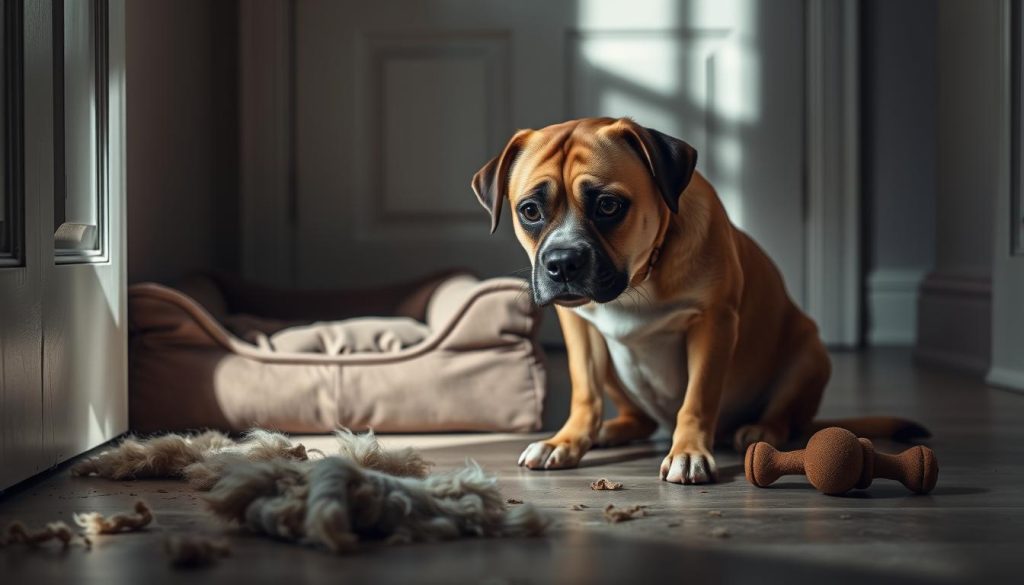
Separation anxiety is a common issue among dogs. It happens when dogs feel distressed or panicked when left alone. This can lead to destructive behaviors and loud barking.
Changes in routine are a big factor in dog anxiety. For example, a new work schedule or moving homes can cause uncertainty and fear. Past negative experiences, like being abandoned, also contribute to separation anxiety.
Quick Recommendation : Our blog is filled with tips , tricks, and methods for training your dog. If you would like to attend a Free Dog Training Workshop, we recommend the K9 Training Institute , give it a try.
Some breeds, like Labradors, Retrievers, and Terriers, are more prone to stress. This is because they are very social and love their owners a lot. Knowing this can help owners prevent and manage separation anxiety.
Understanding the causes of separation anxiety helps dog owners create a safe space. This reduces distress and ensures a happy, anxiety-free time when left alone.
Creating a Safe and Comfortable Space for Your Dog
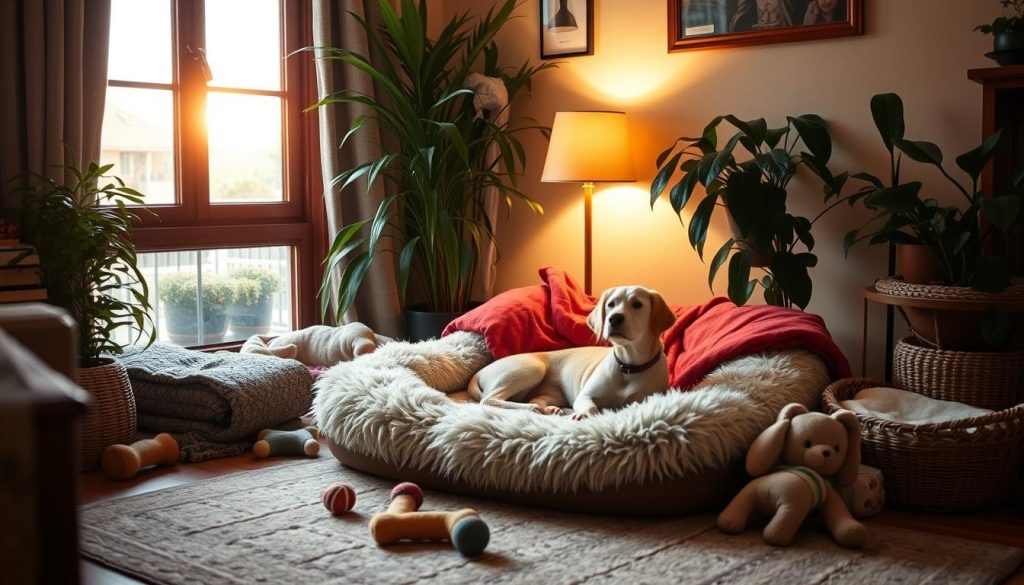
Creating a safe and welcoming space for your dog is key when you leave them alone. Dog-proofing and making cozy areas can lessen separation anxiety. Start by picking a special spot in your home for your dog, like a cozy corner or a room just for them.
Give your dog a comfy bed or mat, along with their favorite toys and treats. Add calming scents like lavender or pheromone diffusers to relax them. Make sure the area is well-ventilated and safe from hazards. This way, your dog has their own comfort zone, making them feel better when you’re away.
Quick Recommendation : Our blog is filled with tips , tricks, and methods for training your dog. If you would like to attend a Free Dog Training Workshop, we recommend the K9 Training Institute , give it a try.
Effective dog-proofing is vital for your dog’s safety. This means securing cords, removing small or sharp objects, and blocking off risky areas. By doing this, you ensure your dog’s safety and comfort when you’re not there.
How to Train a Dog to Be Left Alone Without Anxiety
Helping your dog overcome separation anxiety is key for their happiness and your peace of mind. Start by making a safe space for them when you’re away. Then, introduce short alone times, rewarding calm behavior with treats and praise.
Desensitization helps your dog get used to things that make them anxious, like the door closing. Begin with small steps, like picking up keys or putting on shoes. Gradually increase the time you’re away to build their confidence.
Positive reinforcement is a strong tool in training. Reward your dog with treats or playtime when they stay calm. This teaches them that being alone is okay.
Consistency is crucial in training. Stick to a routine for leaving and coming back. With patience and effort, your dog can learn to be independent and confident.
Essential Items and Tools for Anxiety Prevention
Helping your dog deal with separation anxiety can be easier with the right tools. Interactive toys are great for keeping your dog’s mind busy when you’re not there. Puzzle feeders and chew toys can prevent boredom and reduce anxiety.
Calming aids like pheromone diffusers or anxiety wraps can also help. They release calming pheromones or apply gentle pressure. This can help your dog feel more relaxed and calm.
These products aren’t a replacement for training, but they can help a lot. Using interactive toys, calming aids, and consistent training can make your dog feel better when you’re away.
Establishing a Consistent Departure Routine
Creating a regular departure routine is key to training your dog to stay calm when you leave. By setting up departure cues and pre-departure rituals, your dog will learn to see your leaving as a positive thing. This can lower the chances of your dog getting anxious or upset.
Start by figuring out what signals your departure, like picking up your keys or putting on your shoes. Make these departure cues consistent and easy for your dog to spot. This way, your dog will know when you’re about to leave and can get ready.
Also, add pre-departure rituals that you do every time you leave. This could be giving a favorite treat, playing for a bit, or giving a long-lasting chew. These good experiences will help your dog feel calm and happy during your calm goodbyes.
Consistency is the most important thing. By following a routine and sticking to it, you’ll make your dog feel safe and trusted. This will help lower their anxiety when you leave.
Exercise and Mental Stimulation Before Leaving
Getting your dog ready for when you leave is key to avoiding separation anxiety. A great way to do this is by giving them lots of exercise and mental games before you go. A tired and mentally sharp dog will likely sleep well while you’re away.
Begin with a fast walk or a game of fetch. This physical activity will make them tired, helping them relax when you’re gone. Then, add some mental games like puzzle toys or hide-and-seek. These keep their mind busy and prevent boredom, which can lead to bad behavior.
It’s important to exhaust your dog both physically and mentally before leaving. This way, they’ll be happy, calm, and less anxious when you’re away. Adding these activities to your routine helps your dog feel ready and lets you leave without worry.
Using Technology and Monitoring Devices
Technology can be a big help in training your dog to be calm when left alone. Pet cameras, smart feeders, and interactive toys let you see what your dog is up to. This way, you can check on them and even talk to them from afar.
Pet cameras let you watch your dog’s activities and how they react when you’re not there. This helps you figure out what makes them anxious. Smart feeders can also give your dog treats or meals at set times, making them feel secure and in a routine.
Technology also lets you interact with your dog from anywhere. You can use interactive toys and treat dispensers from your phone. This way, you can still give your dog positive feedback, even when you’re not there.
Using technology can make training your dog easier and more effective. It helps them feel more secure and less anxious when you’re away. This way, your dog can be happy and well-adjusted, even when you’re not there.
When to Seek Professional Help
Training your dog to be alone without anxiety is key. But sometimes, you might need professional help. If your dog’s anxiety is severe or doesn’t get better with home training, it’s time to seek experts.
Dog behaviorists can offer deep assessments and custom plans. They find the cause of your dog’s anxiety and create effective strategies. They might suggest special training, changes in the environment, or even medication.
Also, a vet visit is important to check for any health issues that could cause anxiety. Vets can do a full check-up, give a diagnosis, and work with behaviorists to make a complete treatment plan.
Every dog is different, and there’s no single solution for anxiety. Getting help from professionals ensures your dog gets the care they need. This way, they can overcome their anxiety and enjoy a happy, stress-free life.
Conclusion
Training your dog to be alone without anxiety is a journey. It needs patience, consistency, and ongoing support. By using the strategies from this article, you can make your dog more independent. This will help create a worry-free home for everyone.
Long-term management is crucial for anxiety-free dogs. Keep practicing the techniques you’ve learned. Also, watch for any changes in your dog’s behavior that might need extra attention. With dedication and a proactive approach, you can ensure your pet’s well-being. This will also strengthen your bond for years to come.
Enjoy the journey, celebrate your dog’s progress, and know you’re doing your best. You’re working hard to make your dog’s life happy, healthy, and anxiety-free. Together, you can overcome separation challenges and build a lasting trust.
Quick Recommendation : Our blog is filled with tips , tricks, and methods for training your dog. If you would like to attend a Free Dog Training Workshop, we recommend the K9 Training Institute , give it a try.