

Does your dog’s size really change how you train them? Understanding the needs of small and large breeds is key for good dog training. It’s all about managing their behavior.
Small dogs and large dogs have different behaviors and abilities. This means you can’t use the same training for all dogs. From tiny Chihuahuas to big Great Danes, each needs special training.
We’ll look into the details of training small and large breeds. You’ll see why custom training is important. Are you ready to learn how to train your dog based on their size?
Let’s explore how to train your dog, no matter their size. We’ll make sure they behave well.
Understanding Size-Based Differences in Dog Behavior
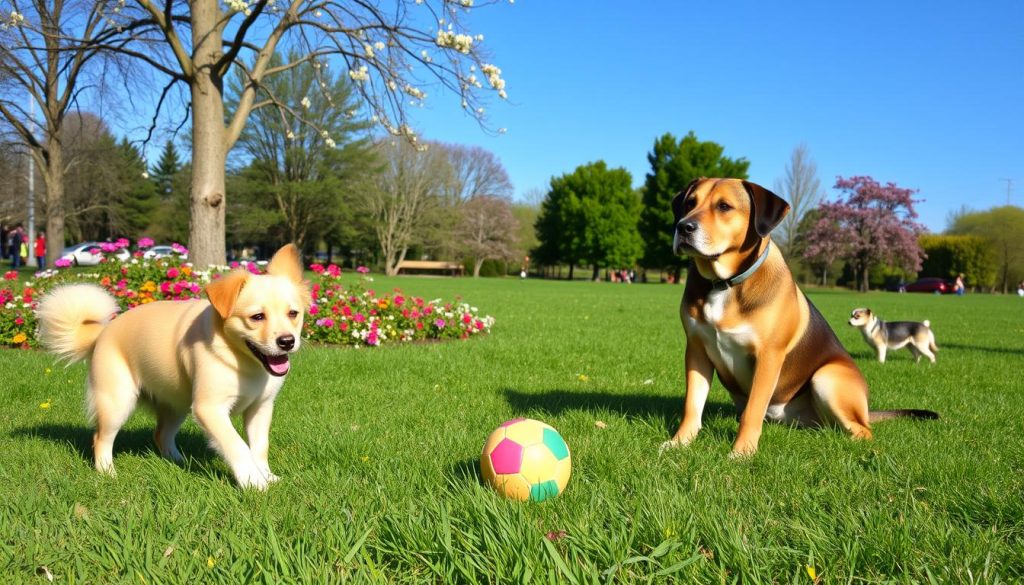
Dogs of different sizes behave in unique ways. Small dogs and large dogs have their own traits. These traits come from their metabolism, space needs, and breed history.
Small dogs have fast metabolisms, making them more energetic. They need to eat often. This energy can make them hyperactive during training.
Quick Recommendation : Our blog is filled with tips , tricks, and methods for training your dog. If you would like to attend a Free Dog Training Workshop, we recommend the K9 Training Institute , give it a try.
Space is also key for dogs. Small dogs prefer cozy spots and can feel lost in big areas. Large dogs need room to roam and can feel trapped in small spaces.
Every breed, no matter the size, has its own training needs. A small Chihuahua might need different training than a small Dachshund. Training a Great Dane is different from training a Saint Bernard, even if they’re the same size.
Knowing how size affects behavior helps you train your dog better. It makes their life better and strengthens your bond with them.
Choosing the Right Training Methods
Choosing the right dog training methods is key for your dog’s happiness and learning. It’s important to know about dog psychology. Different breeds and sizes need different approaches.
Quick Recommendation : Our blog is filled with tips , tricks, and methods for training your dog. If you would like to attend a Free Dog Training Workshop, we recommend the K9 Training Institute , give it a try.
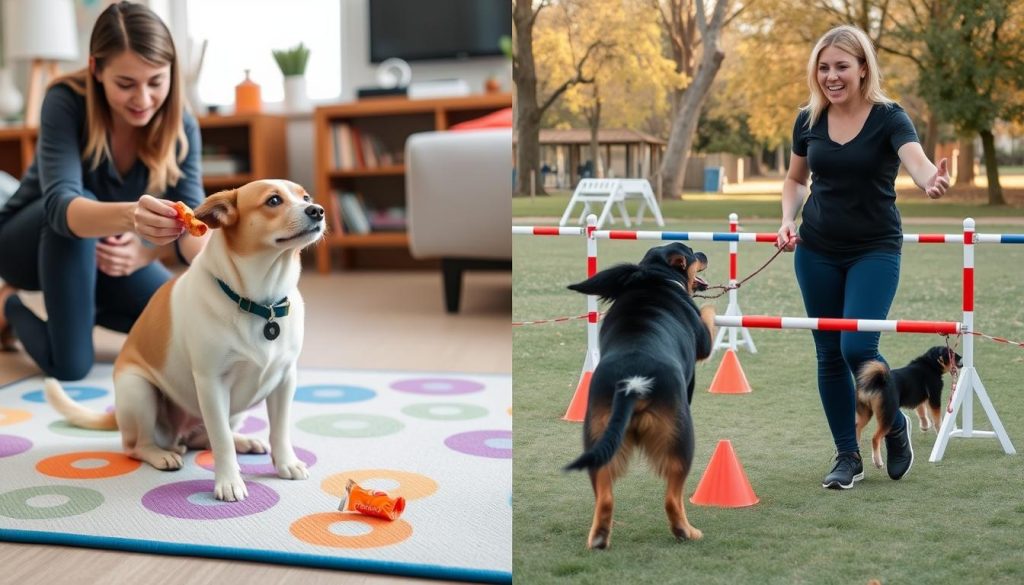
Small dogs need patience and gentle handling because they are fragile. Large dogs do better with structured, active training. Positive reinforcement is always best, as it makes learning fun for your dog.
Experts like Patricia McConnell and Dr. Ian Dunbar say positive reinforcement works for all dogs. Avoid training that scares or stresses your dog. This can harm their mental health and learning.
The best training meets your dog’s physical and mental needs. By using positive reinforcement and understanding dog psychology, you create a positive training experience for your dog.
Leash Training for Small Dogs
Leash training is key for small dog owners to keep your pup in line during walks. Their delicate necks mean you must pick a harness over a collar to avoid harm. Harnesses support your dog’s body better, offering gentle control.
Choosing the right leash gear is crucial for small dog training. Start with a lightweight harness that fits well but isn’t too tight. This spreads out the pressure, cutting down on neck strain. Introduce the leash slowly to prevent your dog from getting anxious or resistant.
Here are some tips for puppy leash training: First, let your puppy wear the harness indoors for a bit to get used to it. Then, use gentle guidance to lead them around the house before going outside. Remember, patience and positive feedback are essential for successful training.
Make sure the harness or collar is snug but not too tight. You want to keep your dog comfortable while still in control. With the right gear and these tips, you and your small dog can enjoy safe, fun walks. This will help build their confidence and obedience.
Leash Training for Large Dogs
Training a large dog to walk on a leash can seem tough. But, with the right approach and tools, you can do it. It’s important to start with the basics for effective leash control. Managing a dog’s strength and momentum is crucial.
It’s vital to prevent pulling during walks. Here are some helpful tips to keep your dog in line.
First, get a big dog harness made for large breeds. These harnesses spread out the force, making it easier to handle your dog’s strength. Let your dog get used to the harness indoors before leash training outside.
When walking, stay calm and firm. Being consistent is key in handling a strong dog. If you let them pull, it confuses them.
Use commands like “heel” and “stop” to control your dog’s pace. Give treats and praise for walking calmly by your side. This encourages good behavior.
Preventing pulling works with redirection. If your dog pulls, use a treat or toy to guide them back. This teaches them walking calmly gets rewards. Be patient and persistent; it will be worth it.
Obedience Training: Commands and Techniques
Obedience training is key for a well-behaved and happy dog. Starting with basic commands is crucial. Commands like ‘sit’, ‘stay’, ‘come’, and ‘heel’ lay the groundwork for better communication.
Teach these commands with positive reinforcement and consistency. Reward your dog quickly to reinforce good behavior. As you get better, add advanced tricks like ‘roll over’ or agility training. Remember, patience and repetition are essential.
Understanding your dog’s body language is also important. Good communication makes training more enjoyable and controlled. Whether your dog is big or small, clear commands, consistent practice, and positive reinforcement are the keys to success.
Socialization: Small Dogs vs. Large Dogs
Socialization is key for your dog’s behavior, no matter their size. Early puppy socialization is vital. It includes safe dog-to-dog interaction and exposure to various people and places.
Small dogs are naturally cautious. They need slow exposure to larger dogs and new faces. This helps them build social skills without feeling scared. Always be gentle and consistent.
Larger dogs can be intimidating. But, with positive reinforcement, they can learn to be gentle. Regular dog-to-dog interaction teaches them good behavior. This makes them well-mannered friends.
Every dog, big or small, needs to be confident and adaptable. Exposure training gives them many social experiences. These early experiences shape their behavior for life.
Knowing how to socialize small and large dogs is important. It helps your dog become a friendly companion. With patience and effort, your puppy will have a lifetime of positive interactions.
Common Challenges in Training Small Dogs
Training small dogs can be tricky, often leading to small dog syndrome. One big issue is excessive barking. This can be really annoying for owners and neighbors alike. To fix this, use commands like “quiet” and treats to reinforce good behavior.
Housebreaking small dogs can also be tough because of their small bladders. A regular bathroom schedule and pee pads indoors can help. Be patient and celebrate small victories to improve housebreaking.
Stubbornness in training is another common problem. Small dogs might seem defiant, but don’t give up. Short, fun training sessions with lots of rewards can help overcome stubbornness.
Knowing these challenges and using the right training methods can make your relationship with your small dog better.
Common Challenges in Training Large Dogs
Training large puppies can be tough, especially for high-energy breeds. One big challenge is managing dominance. It’s important to show them who’s boss early on. Being consistent with commands and setting clear boundaries is key.
Another challenge is their need for lots of exercise. High-energy breeds need a lot of physical activity to stay happy and healthy. Daily walks, playtime, and games are crucial to keep them active and mentally sharp.
Controlling their habit of jumping up on people can also be tough. This behavior is not just annoying; it can be dangerous because of their size. Teaching them to sit or down and rewarding them for good behavior can help a lot.
Understanding and tackling these challenges early on makes training large puppies easier. With patience, consistency, and the right methods, you can help your high-energy breed grow into a well-behaved dog.
Conclusion
Training your dog, big or small, needs patience, consistency, and knowing what they need. Understanding size-based differences helps tailor training. The right leash and obedience training, plus socialization, are key for success.
Training both small and large dogs comes with its own set of challenges. Small dogs might be stubborn or bark too much. Large dogs can be hard to handle because of their strength. But, with a positive attitude and consistent effort, these challenges can be overcome.
Being a responsible dog owner means more than just training. It’s about creating a happy home for you and your dog. Training is a journey that never ends for you and your dog. A well-trained dog brings joy and shows your love and dedication.
Quick Recommendation : Our blog is filled with tips , tricks, and methods for training your dog. If you would like to attend a Free Dog Training Workshop, we recommend the K9 Training Institute , give it a try.