

Have you ever wondered why your dog behaves perfectly at home but turns into a bundle of nerves in public?
Teaching your furry friend to stay calm in public places is key. It’s not just for your convenience—it’s essential for your peace of mind and your dog’s well-being. Dog training techniques and obedience are vital for your pet’s behavior in public.
This ensures your dog’s safety and reduces anxiety. It also helps you follow local pet ordinances.
In this article, we’ll cover practical dog training and behavior modification. You’ll learn how to make every outing enjoyable and peaceful. From understanding your dog’s temperament to mastering public etiquette, you’ll get all the guidance you need. So, let’s dive in and get ready to transform your public outings with your canine companion!
Understanding Your Dog’s Temperament
Knowing your dog’s natural disposition is crucial for a successful temperament assessment. A dog’s temperament greatly affects their behavior in public and how they respond to training. By identifying your dog’s personality type, you can adjust your training to meet their needs.
Quick Recommendation : Our blog is filled with tips , tricks, and methods for training your dog. If you would like to attend the Free Dog Training Workshop, we recommend the K9 Training Institute.
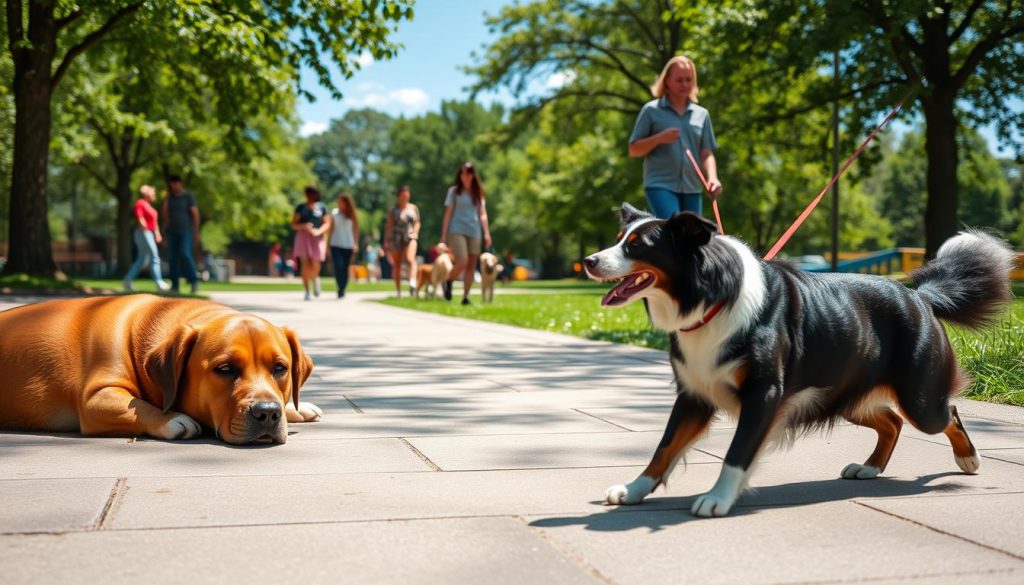
It’s important to notice breed-specific behaviors. These can change how your dog reacts to new places and things. For example, herding breeds might act differently than non-herding breeds. Watching your dog’s body language is also key. Look for signs like tail wagging, ear position, and sounds to see if they’re comfortable or stressed.
By doing a detailed temperament assessment, you can learn about your dog’s special traits. This knowledge helps you guess how they’ll act in public and how to train them. Knowing about dog personalities, breed behaviors, and body language is essential for a well-behaved dog.
Preparing Your Dog for Public Outings
Going on adventures with your dog can be fun. But, it’s important to do it the right way. Start by taking your dog to quiet places first. This could be a park or a sidewalk with no people.
Quick Recommendation : Our blog is filled with tips , tricks, and methods for training your dog. If you would like to attend a Free Dog Training Workshop, we recommend the K9 Training Institute.
Make sure your dog gets enough mental play. Use puzzle toys or simple games to help them feel confident. This keeps them calm in new situations.
Having a regular training schedule is key. Keep training sessions short and positive. Include both exercise and social activities to prepare your dog for public outings.
Following basic dog training rules helps a lot. Keep sessions short and reward your dog with treats or praise. This way, you and your dog will have a great time together.
Socialization Techniques
Teaching your dog to get along with others is key. Introduce them to new people, dogs, and experiences. This boosts their confidence and calmness in public.
Puppy socialization classes are a great way to do this. They offer a safe space for your dog to learn and grow. Experts are there to guide them.
Structured classes help dogs get used to new things slowly. This reduces stress and fear. Playdates with other dogs are also helpful.
Playdates teach dogs how to interact well with others. You can help them learn good manners and stop bad behavior. This builds their confidence and helps them stay calm in new situations.
Adding new experiences to your dog’s daily life is easy. Take them on different walks and show them new places. Let them see and hear various things. This makes them more adaptable and comfortable in public.
Using Desensitization and Counter-Conditioning
Desensitization and counter-conditioning are key methods to reduce dog anxiety. They help dogs get used to different things, making them feel more at ease in public. This makes them less anxious in crowded places.
Desensitization starts with small steps. It exposes dogs to things that scare them, but at a low level. For example, if a dog is scared of car sounds, you might start with sounds from far away. Then, you slowly move closer as they get used to it.
The counter-conditioning process adds a positive twist. It pairs the scary thing with something good, like treats or hugs. This way, dogs learn to see scary things as fun. Together, these methods can greatly reduce dog anxiety in many situations.
To use these methods well, start small and go slow. First, find out what scares your dog. Then, introduce the scary thing at a low level and reward calm behavior. As your dog gets better, you can make the scary thing a bit louder or closer.
These techniques are useful for many things, like loud noises, busy places, and new environments. Using them regularly helps dogs feel more confident in public. It makes them ready for any adventure.
Remember to be patient, keep trying, and stay positive. Your hard work will make your dog happier and more relaxed. They’ll be ready for any public outing with you.
Training Commands for Public Behavior
Teaching your dog good manners in public is key. Commands like ‘sit,’ ‘stay,’ ‘come,’ and ‘leave it’ are essential. These commands help your dog behave well and stay safe in public.
Leash training is also vital. It keeps your dog focused, even when there’s a lot going on. Start with short, frequent sessions and reward your dog for a loose leash. Being consistent and positive is crucial for leash training.
Good dog training uses patience, repetition, and rewards. First, teach your dog these commands in a quiet place. Then, move to busier areas. This helps your dog learn to obey, even with distractions.
Make sure to practice these commands often. Use them in your daily life. This way, your dog will always behave well in public. It also makes your bond stronger.
Utilizing Positive Reinforcement
Positive reinforcement training is a great way to teach your dog good behavior in public. It rewards your dog for acting well, making them want to do it again. This method uses treats, praise, or clicker training to show your dog they’re doing something right.
To start, figure out what your dog likes best. Some dogs love treats, while others prefer praise or hugs. Pick a reward that works for your dog and use it every time they behave well. With clicker training, a clicker marks the good action, followed by a treat.
Building good habits in your dog takes a system that works. Make sure to reward the right behaviors right away. Everyone should use the same rewards to keep things consistent.
Positive reinforcement training strengthens your bond with your dog. It builds trust and cooperation. Soon, your dog will know that good behavior means fun times together.
Managing Your Dog’s Energy Levels
It’s key to know your dog’s energy levels to manage their behavior, especially in public. Dogs with lots of energy or hyperactivity can get too excited. This makes it hard to keep them calm. To handle dog excitement, you must meet their exercise needs.
Regular physical activity is essential for burning off excess energy. It helps dogs stay calm. Daily walks, playtime, and dog sports can help meet their exercise needs. A well-exercised dog is more likely to be calm and less hyperactive.
Mental stimulation is also important for keeping your dog relaxed. Puzzle toys, training sessions, and interactive games are great. These activities help control your dog’s energy and excitement.
Before going out, make sure your dog’s energy is balanced. A pre-outing exercise can help them burn off steam. This ensures they’re calmer during your outing. If your dog gets too excited while out, calm them with commands or a brief rest.
Tools and Accessories for Public Training
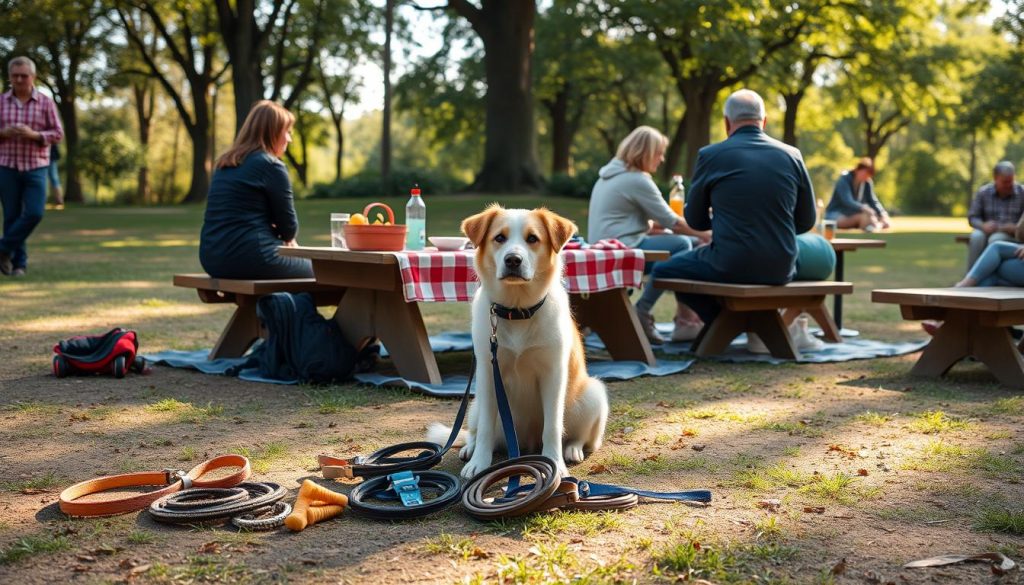
Choosing the right tools is key when training your dog in public. The right leashes and harnesses help with control and comfort. This makes walks and outings easier for both you and your dog.
A no-pull harness is great for dogs that pull a lot. It helps guide them gently and prevents discomfort.
A portable water dish is another must-have. It keeps your dog hydrated, especially in warm weather or long walks. A happy dog is a calm one.
Tools like clickers and training collars are also vital. They help you teach your dog in busy places. Used right, they make sure your dog knows and follows your commands.
Dog treat bags are essential for rewarding good behavior. They’re easy to carry and come in many designs. Some even serve as waist packs for extra convenience.
Choosing the right tools depends on your dog’s size, personality, and training needs. With the right leashes, harnesses, and accessories, you and your dog will do great in public.
Quick Recommendation : Our blog is filled with tips , tricks, and methods for training your dog. If you would like to attend a Free Dog Training Workshop, we recommend the K9 Training Institute.
Common Challenges and How to Overcome Them
When you take your dog out, you might face some common issues. One big one is dog barking. Dogs bark a lot when they’re excited, anxious, or scared. To fix this, use calm commands and give them treats for being quiet. Always stick to your training plan.
Another problem is dealing with distractions. Dogs can get easily distracted by other dogs, people, or sounds. Use commands like “watch me” to keep their focus. Start practicing these commands in quiet places before moving to busier areas.
Reactive dog behavior, like lunging or growling, is also common. First, figure out what triggers this behavior and keep your dog away from it while rewarding calmness. As your dog gets more comfortable, you can slowly bring them closer to the trigger. Remember, patience and consistency are important.
Lastly, helping your dog overcome public fears is key. Some dogs get scared in new places. To help, gradually introduce them to new places with positive experiences, like treats or play. Always put your dog’s comfort first and be patient as they get used to new things.
Conclusion
Starting your dog’s training journey is very rewarding. It helps them feel calm in public. First, get to know your dog’s personality and prepare them for outings.
By socializing and desensitizing your dog, they learn to handle different places and things. Training commands and positive reinforcement are crucial. They help your dog behave well and strengthen your bond.
Keeping your dog’s energy in check is important. Use tools and accessories to help. Overcoming challenges shows your dedication and patience.
Enjoy the journey of improving your dog’s behavior. A well-trained dog makes outings more fun. Keep working hard and enjoy the journey of growing closer to your dog.
Quick Recommendation : Our blog is filled with tips , tricks, and methods for training your dog. If you would like to attend a Free Dog Training Workshop, we recommend the K9 Training Institute.