
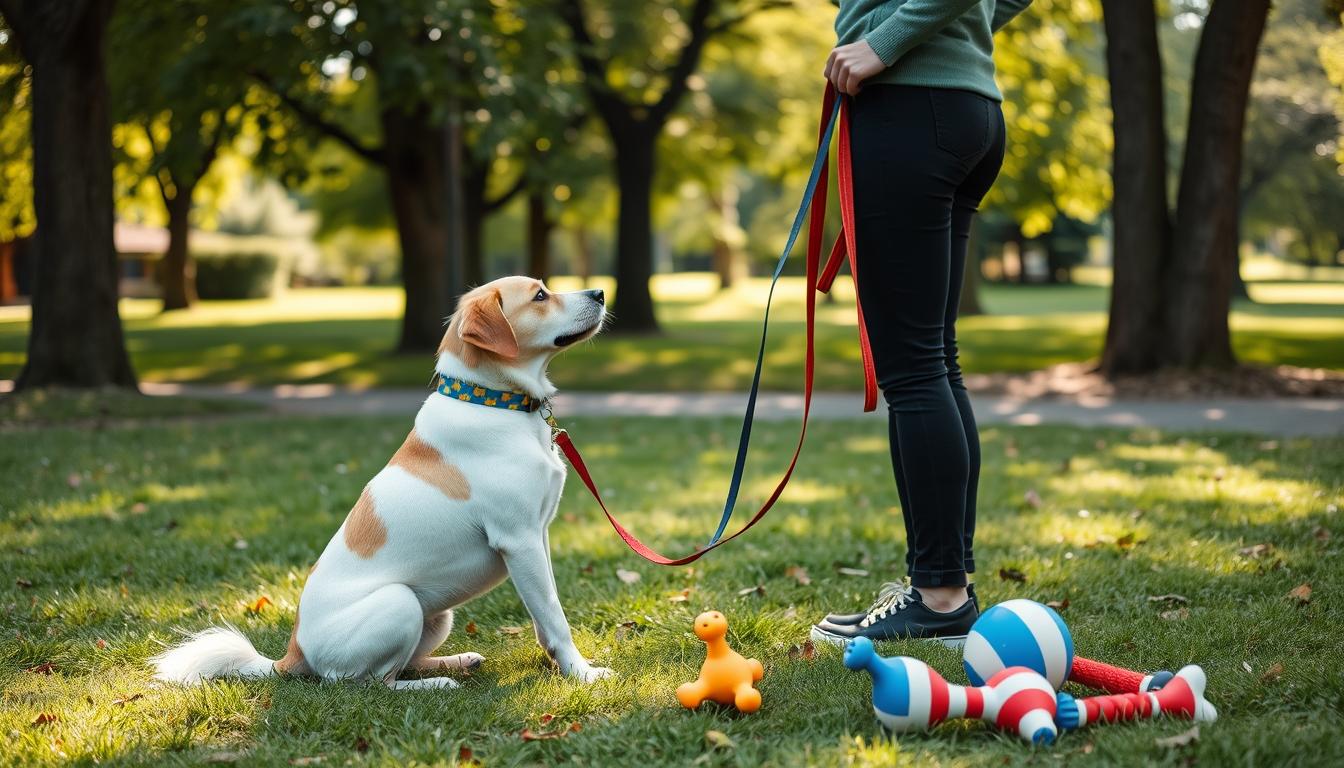
Are you finding walks with your dog stressful? Or do you wonder how to train them to use a leash? With about 76% of dog owners walking their pets every day, leash training is key. It improves your walks and your bond with your dog.
Leash training is more than just walking side by side. It’s about keeping your dog safe and happy.
Learning to train your dog for leash use can make walks enjoyable. The RSPCA suggests ‘loose-leash walking’. This method rewards your dog for walking without pulling, every few steps.
This approach is a great way to achieve stress-free walks with your dog.
Understanding the Basics of Lead Training
Choosing the right equipment is key when teaching a dog to walk on a lead. A good leash is robust, comfortable, and the right size. It makes a big difference in how your dog behaves on a lead. Look at different leashes and collars, like front-attach harnesses and head halters, to find the best fit for your dog.
Teaching a dog to walk on a lead needs patience, consistency, and positive rewards. Use tasty treats to motivate your dog to stay by your side. Reward them right away when they behave well. This way, your dog will learn to enjoy walking on a lead.
Every dog is different, and what works for one might not work for another. The right equipment and positive rewards can help your dog learn good lead behavior. Enjoy stress-free walks together by practicing consistently and being patient.
Essential Equipment for Proper Lead Training
Teaching your dog leash manners is easier with the right gear. You’ll need a comfy collar or harness and a good leash. By law, dogs must wear a collar and ID tag. Make sure the collar fits well, with enough room to slide two fingers under it.
A front-attach harness is great for dogs that pull hard. Use a double-ended leash with this harness for better control. Choose a leash that matches your dog’s size to avoid any issues.

Quick Recommendation : Our blog is filled with tips , tricks, and methods for training your dog. If you would like to attend a Free Dog Training Workshop, we recommend the K9 Training Institute , give it a try.
Opt for a leash that’s about 2 meters long for your dog’s comfort. Avoid harsh collars that can hurt your dog. Also, steer clear of extendable leashes as they can lead to pulling and entanglement.
Introduce the collar or harness and leash slowly and positively. Let your puppy get used to them in short sessions. With the right gear and training, you and your puppy can enjoy walks together.
Preparing Your Dog for Lead Training
Getting your dog ready for leash training is crucial. Start by letting them get used to the leash in a quiet place. Use treats and praise to help them feel comfortable with the harness and leash.
As you begin, keep training sessions short and fun. Start with short walks and gradually make them longer. Being patient and consistent is key, as lead training takes time.
Choosing the right equipment is also important. A study showed that dogs on a 5-meter leash sniffed more than those on shorter leashes. This highlights the role of leash length in training.
By following these tips and practicing regularly, you can make your dog a great walking companion. Stay calm, patient, and consistent. This will help you succeed in dog obedience training with a leash.
How to Train a Dog to Use a Leash Properly: Step-by-Step Guide
Training a dog to use a leash needs patience and positive rewards. You’ll need a collar or harness, a leash, and treats. Start indoors, in a quiet area, to let your dog get used to the leash.
Keep training sessions short and fun. Begin with short walks and increase the distance as your dog gets more comfortable. Use commands like “walk” or “heel” to keep them by your side. Give treats and praise when they do well.
Consistency and patience are crucial. Don’t pull on the leash, as it can make training harder. Use treats and praise to encourage good behavior. With time, your dog will walk nicely on a leash, making walks enjoyable for both of you.
Vary your training routes and places to help your dog learn in different situations. This will make them more confident and responsive. By following these steps, you’ll train your dog to use a leash properly and enjoy stress-free walks together.
Managing Common Lead Walking Challenges
Teaching dogs to walk on a lead without pulling is a big challenge. Dogs pull because they think humans are slow and the outdoors are more exciting. To fix this, teach your dog to walk beside you without pulling. A good trick is to act like a “tree” and only move when your dog returns to you.
This trick works well for breeds that naturally pull, like Scent Hounds and Arctic breeds. Rewarding your dog for walking nicely and stopping pulling helps them learn. Positive training methods, like treats and clicker training, are also great for this.
Choosing the right leash is also important. It should be comfortable and safe for both you and your dog. By following these tips and staying consistent, you can overcome walking challenges and enjoy walks together.

Teaching a dog to walk on a lead takes patience and persistence. With time and effort, your dog will learn to walk by your side without pulling. This makes leash training a rewarding experience for both you and your pet.
Advanced Lead Training Techniques
As you get better at dog obedience training with a leash, you can try more advanced techniques. One good method is loose-leash walking. This means your dog walks by your side without pulling on the leash. Use treats and praise to teach them, keeping sessions short and fun, about 5-10 minutes.
Being consistent is crucial in leash training. Create a routine and follow it. You can also add distractions, like other dogs or people, to keep your dog focused on you. Positive rewards, like high-value treats, help your dog learn to walk nicely. For example, you can use the “luring” method to guide them, eventually removing the leash.
Some trainers, like Barbara Tran, use “Catch Me If You Can” to teach dogs to stay close. Others, like Lisa Waggoner, use “The Box Step” dance to train dogs to walk beside their owners. These methods can strengthen your bond and make walks enjoyable.

Quick Recommendation : Our blog is filled with tips , tricks, and methods for training your dog. If you would like to attend a Free Dog Training Workshop, we recommend the K9 Training Institute , give it a try.
Remember, advanced lead training takes time and patience. With the right techniques and positive reinforcement, your dog will become a well-behaved walking partner. This makes dog obedience training rewarding for both of you.
Special Considerations for Puppies vs Adult Dogs
Training puppies for leash manners is different from adult dogs. Puppies can learn to walk on a leash in about a month. They tend to follow their owners closely, making it easier to start training early.
Using harnesses instead of collars is a good tip for puppies. Harnesses are more comfortable and safer for growing puppies. Positive reinforcement, like treats and praise, helps them learn to walk by your side.
The leash should be four to six feet long for better control. Training sessions should be short, about 2 minutes, with breaks for play. Aim for 15 minutes of training total.
Training puppies is different from older dogs due to their energy and focus. Puppies need shorter, more enthusiastic training sessions. Understanding these differences helps in teaching good leash manners.
Be patient and consistent when training your puppy. If you face challenges, don’t hesitate to get professional help. With the right approach, your puppy will become a well-behaved companion.
Maintaining Consistent Lead Behaviour
Consistency is key in dog leash training. To keep your dog’s lead behaviour consistent, train regularly. Make these sessions fun and rewarding. Keep them short, lasting 5-10 minutes, for the best results.
Use treats to encourage your dog to walk beside you before attaching a lead. This makes walking on a leash a positive experience. Regular practice and positive reinforcement are essential for long-term success.
Walk at a pace that suits your dog’s natural speed to avoid joint strain. A 2m (6ft) long leash is good, offering safety and freedom. Exploring new places during training helps with socialisation and development.
Follow these tips for consistent leash training. This way, your dog will become a well-behaved companion. Leash training is crucial for social responsibility, ensuring dogs behave well around people and other animals. With patience and consistent practice, you can enjoy walks with your dog.
Troubleshooting Common Lead Training Mistakes
Teaching a dog to walk on a lead can be tricky. One big mistake is not rewarding good behaviour. This can make your dog frustrated and slow down training. Always give treats and praise when your dog walks nicely by your side.
Using the wrong equipment is another common error. Retractable leashes can make dogs pull more. Use a standard six-foot leash or a long line for longer walks. Choose a martingale or harness lead for your dog’s comfort and safety. Remember, dogs have a much better sense of smell than humans, so use this to your advantage during training.
Being consistent is crucial when teaching a dog to walk on a lead. Set clear rules and make sure everyone agrees. Don’t reward bad behaviour like pulling. Instead, use positive methods like stopping and rewarding good behaviour. By avoiding these mistakes, you can teach your dog to walk nicely and enjoy walks together.
Conclusion: Mastering the Art of Lead Walking
Congratulations! You’ve learned how to train your dog to walk nicely on a lead. Remember, it’s a journey that needs patience and consistency. As you keep practicing, you’ll see your dog’s behaviour improve, making walks enjoyable for both of you.
Keep up the good work by practicing often and rewarding your dog for good behaviour. Pay attention to your dog’s needs and adjust the training if needed. With effort, dog obedience training with a leash will become easy, strengthening your bond during walks.
Stay committed to lead training tips for dogs and ask for help if you need it. Mastering lead walking will bring you closer to your pet. You’ll enjoy stress-free walks together.
Quick Recommendation : Our blog is filled with tips , tricks, and methods for training your dog. If you would like to attend a Free Dog Training Workshop, we recommend the K9 Training Institute , give it a try.