

Ever thought about if your dog would act right in a life-threatening situation? In emergencies, every second counts. Teaching your dog emergency commands could save their life. It’s key for every dog owner to understand the importance of dog safety training.
Being able to quickly follow commands in a disaster, accident, or health crisis is crucial. It’s not just training—it’s preparing your dog for emergencies. It helps with canine emergency response and makes sure your pet is ready for emergencies. Learn the essential techniques to keep your dog safe in critical moments.
Understanding the Importance of Emergency Commands for Dogs
When it comes to pet safety, emergency commands for dogs are crucial. These commands help keep your pet safe and prevent dangerous situations. They teach pets to react quickly in emergencies.
Many situations show why these critical commands for pets are so important. Imagine your dog running towards traffic on a busy street. A command like “Stop” or “Come” could save their life. The American Society for the Prevention of Cruelty to Animals (ASPCA) says millions of pets could be saved each year with proper training.

Quick Recommendation : Our blog is filled with tips , tricks, and methods for training your dog. If you would like to attend a Free Dog Training Workshop, we recommend the K9 Training Institute , give it a try.
Studies from pet welfare groups highlight the importance of training. The ASPCA says about 70% of pet accidents happen because of a lack of basic obedience. This shows that emergency training for dogs is essential for every pet owner.
Learning critical commands for pets means a safer future for your dog. It lets you both handle unexpected situations with confidence. Training not only keeps your pet safe but also strengthens your bond.
Selecting the Right Emergency Commands for Your Dog
Choosing the right emergency commands for your dog is key. They need to respond fast and well in any situation. Your commands should be clear, simple, and easy for your dog to recognize.
Use simple, one-word commands that are different from everyday words. This makes it clear to your dog when it’s an emergency. It helps them not get confused and respond correctly.
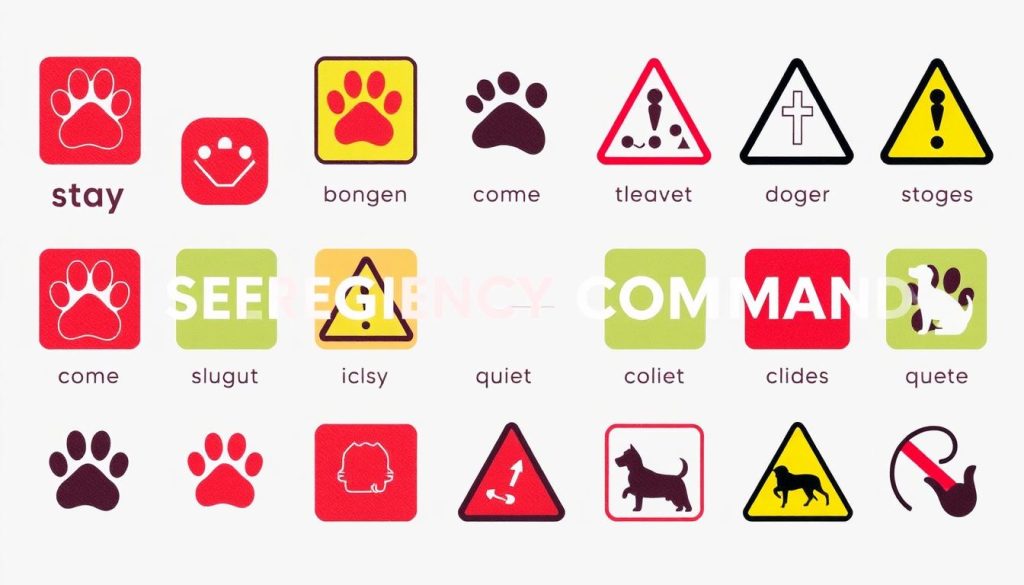
Experts like dog trainers and animal behaviorists suggest certain commands. These are widely recognized and useful:
- Come: A vital command that can quickly bring your dog to you in potentially dangerous situations.
- Stop: Use this to halt any unwanted or risky behavior immediately.
- Leave it: Ideal for preventing your dog from picking up harmful objects or engaging with unsafe environments.
- Drop: Ensures your dog releases whatever they have in their mouth, which could be essential during emergencies.
- Quiet: Sometimes necessary to prevent excessive barking during critical moments.
By focusing on these commands, you build a strong foundation for emergency signals. Consistent use helps your dog understand and react right. This gives you a reliable response in urgent situations.
Training Your Dog to Recognize Emergency Commands
Teaching your dog emergency commands is key for their safety and your peace of mind. Start with basic training and focus on important commands. Follow this guide to teach your dog these crucial instructions.
Choose the commands you want to teach, like “stop,” “come,” or “leave it.” Use the same word and tone for each command. This makes it clear what each word means.
Use positive reinforcement to teach your dog. Give them treats, praise, or play when they do something right. This makes them happy to follow commands. Dog trainer Victoria Stilwell says rewards are key to good behavior.
Practice commands often in different places. This helps your dog learn to respond in various situations. Regular practice makes the commands second nature.
Make training sessions real-life like. Practice “stop” during walks or “come” in a park. This shows your dog how to use commands in everyday life. The American Kennel Club (AKC) suggests using commands in daily activities.
Remember, patience and persistence are essential. Every dog learns at their own speed. Stick with it, and your dog will learn the commands.
Quick Recommendation : Our blog is filled with tips , tricks, and methods for training your dog. If you would like to attend a Free Dog Training Workshop, we recommend the K9 Training Institute , give it a try.
The Role of Timing in Emergency Command Training
Timing is key in dog training, especially for emergency commands. Your dog’s age affects how well they learn these commands. Training at the right time can make learning faster and more effective.
It’s important to know when your dog is most ready to learn. Dogs, especially puppies, can learn quickly when they’re focused. So, timing is crucial in dog training.
Experts say dogs have short windows when they’re most open to learning. Quick and consistent training during these times makes learning faster. So, focus on being consistent and on time with your training.
Timing is important not just for the first training sessions. Regular practice keeps your dog ready to respond in emergencies. This ensures they always know what to do when it matters most.
Tools and Resources for Effective Training
Training your dog to respond to emergency commands needs the right tools. These tools help make commands clear and encourage good behavior. They are key to successful dog training.
Clickers are a must-have. They make a sound that helps your dog link actions to rewards. Experts say clickers are great for teaching dogs in a positive way.
Treats are also crucial. They motivate your dog to learn and obey new commands. Using treats smartly can really speed up your dog’s learning.
Training kits with collars, leashes, and harnesses are also important. They come with instructions for the best use. For example, Halti Training Leads help control and guide your dog during training.
What experts say matters a lot. Famous trainers like Cesar Millan suggest using these tools together. Good dog training tools can really help your dog learn emergency commands fast.
Preventing Common Training Mistakes
Training your dog to respond to emergency commands needs patience and precision. One key tip is to stay consistent. Inconsistency can confuse your dog and slow progress. Certified dog trainer Ian Dunbar says that repeating commands without consistency leads to unpredictable behavior.
Using rewards correctly is also important. Dr. Stanley Coren says the timing of rewards is key. Immediate rewards help your dog understand what action is being rewarded, speeding up learning.
Dr. Sophia Yin also notes that your emotions affect training. If you’re stressed or angry, your dog will sense it. This can make training harder. Stay calm and positive for better results.
Understanding your dog’s learning pace is crucial. Rushing can frustrate both you and your dog. Watch your dog’s behavior and adjust your training speed to match.
Advanced Techniques for Emergency Command Training
When your dog knows the basics, it’s time for advanced training. These methods make your dog more reliable and quick in emergencies.
Staged scenarios are a great way to train. You create real-life emergency situations in a safe place. This lets your dog practice emergency commands in different settings.
Stress-conditioning is key in advanced training. It helps your dog stay calm and focused in stressful times. Trainers use drills that mimic emergencies to improve your dog’s responses.
It’s crucial to use training methods that fit your dog’s learning style. Customizing training helps each command stick, leading to better emergency responses.
Advanced training boosts your dog’s safety and your peace of mind. You’ll know they can face any emergency with confidence and skill.
Quick Recommendation : Our blog is filled with tips , tricks, and methods for training your dog. If you would like to attend a Free Dog Training Workshop, we recommend the K9 Training Institute , give it a try.
Reinforcement and Maintenance of Emergency Commands
To keep your dog’s emergency command skills sharp, you need to practice regularly. Even after they learn the commands, keep training them. This helps keep their skills sharp over time.
Vets and trainers say a good plan is key for keeping commands strong. Mix up how you reward your dog. Use tasty treats sometimes to keep them interested. Later, switch to praise and affection.
Training sessions should be short but happen often, like a few times a week. This makes sure your dog remembers the commands. You can also fit these sessions into daily activities, making training easy and natural.
Being consistent is crucial. Regular practice keeps your dog’s emergency commands effective. This way, they’ll always respond when needed.
Adapting Emergency Commands to Different Environments
It’s important to teach your dog emergency commands in various places. This could be in busy city streets or on a quiet hike. Knowing how to respond in different settings keeps your dog safe and you calm.
Practicing commands in different places is a good way to start. What works at home might not work in a park or crowded area. This helps your dog get used to new places and respond well.
Research shows that dogs trained in many places are more adaptable. Adding commands for different places to your routine makes your dog more obedient. Always be consistent and patient when teaching your dog in different settings.
The Psychology Behind Dog Training
Understanding dog behavior is key to successful training. To teach your dog emergency commands, you need to know what motivates them. You also need to understand how they learn.
Dogs don’t learn like humans do. They need consistency, repetition, and positive feedback. Training uses these to teach good behaviors and understand their psychology.
A strong bond with your dog is vital for training. Dogs trust and respect their owners more. This trust helps them learn commands faster.
Every dog learns differently, just like people. Knowing your dog’s personality and learning style helps. Tailoring training to your dog’s needs makes it more effective.
By using these psychological insights, you can create a better learning space for your dog. This not only helps with emergency commands but also improves their overall behavior. Understanding canine psychology unlocks your dog’s full learning potential.
Real-Life Success Stories of Emergency Command Training
Dog training success stories show how crucial emergency commands are. Owners and trainers share many stories where these commands saved the day. They prove the power of well-trained dogs in real-life situations.
Take Max, a Labrador Retriever. His owners, Jane and Richard, learned how important training is. During a hike, Max heard “STOP!” and stopped just in time to avoid a ravine.
Bella, a German Shepherd, also had a close call. Her owner, Susan, says Bella heard “DOWN!” and lay down just as a car was coming. This shows how emergency commands can save lives.
Cesar Millan, a well-known dog trainer, agrees. He says trained dogs, like service animals, are incredibly reliable in emergencies. Their training proves the value of emergency commands.
These stories prove that emergency command training is vital. They show how it can prevent accidents and save lives. Each story is a reminder of the importance of training for our furry friends.
Conclusion
Teaching your dog emergency commands is crucial for their safety. This guide showed you how to teach your dog these important cues. It covered everything from why these commands are vital to how to use the right tools.
Learning emergency commands has many benefits. It helps keep your dog safe and prevents dangerous situations. With patience and consistency, you can teach your dog to respond well in any setting.
This guide has given you practical and essential training methods. If you want to learn more, there are many resources available. Keeping up with new techniques will help you raise a well-behaved dog.
Quick Recommendation : Our blog is filled with tips , tricks, and methods for training your dog. If you would like to attend a Free Dog Training Workshop, we recommend the K9 Training Institute , give it a try.