
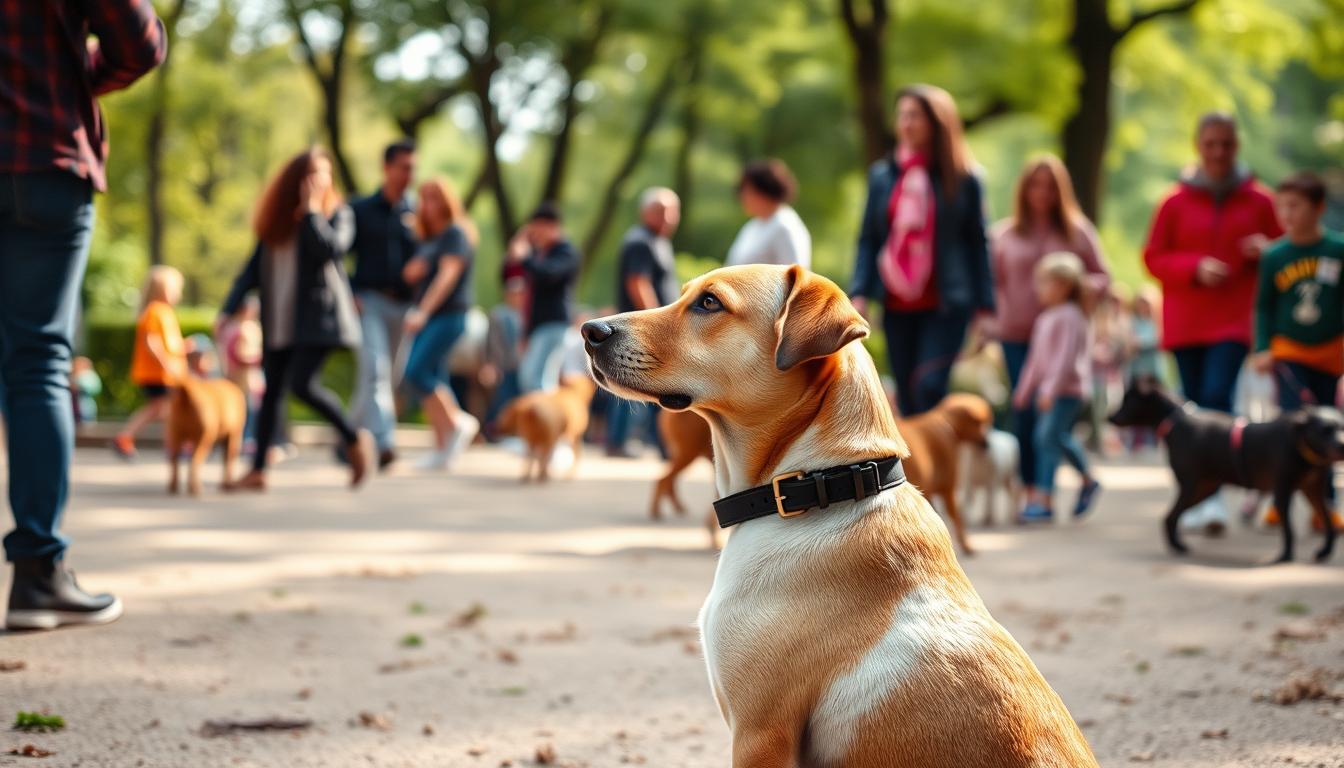
Ever wondered why your dog gets distracted in public? It could be a busy street or a lively dog park. Teaching your dog to stay focused is key. It makes outings better and keeps everyone safe.
This guide will show you how to train your dog to ignore distractions. You’ll learn to control your dog and strengthen your bond. Let’s get started on making your dog training sessions a success.
Understanding Your Dog’s Behaviour
Understanding canine behaviour is key to a good bond with your dog. Dogs mainly talk through body language. Knowing these signs helps you understand their feelings and actions.
Pet psychology explains why dogs react to things. The prey drive is a big reason for chasing. Knowing this helps manage distractions during walks or play.
Dogs love to explore and can get distracted easily. A simple rustle or a squirrel can grab their attention. Watching how they react helps you predict and manage their behaviour.
Socialising your dog is also important. It’s crucial to understand how they interact with others. This helps them get along well with animals and people.
Learning about your dog’s breed can be very helpful. Different breeds have unique traits and behaviours. Also, every dog is different, with their own personality. Knowing this helps in training and understanding them better.
Knowing what distracts your dog and understanding their body language helps a lot. It makes your dog happier and more well-behaved.
Importance of Basic Obedience Training
Basic obedience training is very important. Teaching your dog to ‘sit’, ‘stay’, ‘come’, and ‘leave it’ is key. These
Starting with basic dog commands early is crucial. It helps your dog learn and behave well. By teaching these commands, you’re preparing your dog for more complex tasks. The effort you put in now will make your dog a reliable and well-mannered friend.
Strategies for Training in Public Places
Training your dog in public can be rewarding but also challenging. Using in-situ dog training methods helps your pet get used to real-world distractions. Introducing new scents, sounds, and people helps keep their focus.
Zone training is a good tactic. You start in small areas and gradually move to bigger ones as your dog gets more confident. This slow increase is crucial for public environment training. Begin in quiet spots and then move to busier places.
Threshold learning is also useful. It teaches your dog to respect boundaries in public. Start with simple rules and make them more complex as your dog learns.
It’s important to expose your dog to different situations. Plan regular training sessions in public where your dog meets new things. Using on-the-go training tips will make training easier for both you and your dog.
Tools and Accessories to Help
Training your dog in public can be easier with the right canine training tools. A head collar is a must-have. It helps control pulling and keeps walks smooth, making it a top dog training accessory.

Quick Recommendation : If you would like to attend a Free Online Dog Training Workshop, we recommend the K9 Training Institute , give it a try.
A no-pull harness is also great. It spreads out the force, avoiding harm and discomfort. The clicker is another excellent tool. It’s a small, easy-to-use focus-enhancing gadget that rewards good behaviour with a sound.
Treat pouches are essential too. They keep rewards handy, helping you praise your dog often. Together, these canine training tools and dog training accessories make training fun and effective for both you and your dog.
Socialising Your Dog
Socialising your dog is key to their growth. It makes them comfortable and well-behaved in different situations. Gradually introducing them to various social settings is vital for their behaviour.
Playdates with other dogs are a great way to socialise your pet. They learn to communicate and behave right. Invite friends or neighbours with dogs for these playdates. It’s a safe space for your dog to learn.
Also, take your dog to dog-friendly places like parks and cafes. These outings help them get used to new environments and people. Make sure these experiences are positive by rewarding them for good behaviour.
Group training classes are another good option. They teach obedience and provide a place for your dog to meet others. Trainers help ensure your dog learns to interact well with others.
By following these steps, your dog will become more sociable. They’ll be less likely to react to distractions. Using these techniques helps your dog become well-rounded and friendly.
Training Techniques for Different Dog Breeds
It’s important to know that different dog breeds need different training. A high-energy border collie needs a special approach compared to a strong-willed terrier. This is because each breed has its own unique traits.

Good training means understanding these special needs. It’s about using adaptable dog training methods. These methods should fit the dog’s learning style and what motivates them. This way, training is not just about following rules but also about being fun and rewarding.
In canine diversity training, remember that each breed is different. They might respond differently to commands and rewards. Positive reinforcement that matches the dog’s abilities is key. For example, a retriever loves to fetch, while a scent hound is great at nosework.
By tailoring your training to the breed’s natural talents, you’ll see better results. It makes training more enjoyable for both you and your dog.
Common Challenges and Solutions
Many dog owners face training difficulties. One big issue is dealing with an overly energetic puppy. These puppies find it hard to focus, making training tough.
To tackle this, try short, regular training sessions. This keeps their attention sharp.
Adult dogs can also have attention-seeking issues. This can be really frustrating. But, being consistent is crucial.
Ignore bad behaviour and reward good actions. Staying calm and patient is key.
Setbacks are part of the training journey. Every dog is different, so what works for one might not work for another. By finding the right strategies for your dog, you can make progress.
With patience and the right approach, you can train your dog well. This will make them happy and well-behaved.
Role of Patience and Consistency
Patience is key when training your dog. Consistent training helps your dog learn well. It’s important to stay calm and follow a regular schedule. Irregular training can confuse your dog and slow progress.
Teaching your dog patiently means repeating things and understanding it takes time. But with effort, you’ll see your dog’s behaviour improve slowly but surely. Setting small goals makes training easier and more fun for both you and your dog.
Every dog learns at their own speed. Don’t worry if you hit a bump in the road. Just keep going and stick to your plan. The hard work will pay off, making your dog a well-trained friend.
Being calm and confident helps your dog learn better. Dogs pick up on their owner’s feelings. So, staying calm is key for your dog’s training success. Regular practice, patience, and consistency are the secrets to dog training.

Quick Recommendation : If you would like to attend a Free Online Dog Training Workshop, we recommend the K9 Training Institute , give it a try.
Utilising Positive Reinforcement
Using positive reinforcement training changes how you interact with your dog. It focuses on rewarding good behaviour. Unlike old methods, it doesn’t use punishment. Instead, it makes your dog link good actions with positive results.
Positive reinforcement is all about rewarding good actions. You use things like praise, treats, and play to encourage your dog. For example, if your dog ignores something distracting, give them a treat or praise them. This makes them want to do it again.
But treats aren’t the only thing that works. Play and affection can also be great rewards. Using toys, playing games, or giving belly rubs can be very motivating. This way, you clearly show your dog what you want them to do.
Being consistent is very important. Always reward your dog right away and in a way they understand. This method not only stops bad behaviour but also makes your bond stronger. It makes training fun for both you and your dog.
Case Studies and Success Stories
Let’s look at the amazing journey of a Border Collie named Max. Max had trouble ignoring distractions in busy parks. His owner used positive reinforcement consistently. This led to a big change in Max, showing how hard work can change a dog’s behaviour.
A Labrador named Rosie also had great success. She used to chase squirrels in public. Her owner used special training tools and regular practice. This helped Rosie ignore distractions, making her a top example of successful dog training.
Then there’s Bella, a lively Dalmatian. She would get distracted by other dogs on walks. But with the right training and gradual exposure, Bella’s focus improved. Her story is a great example of how any dog can learn to stay focused in public.
These stories show the importance of dedication and the right training plan. They offer a guide for your own dog’s training journey. They remind us that with the right approach, any dog can learn to behave well in public.

Quick Recommendation : If you would like to attend a Free Online Dog Training Workshop, we recommend the K9 Training Institute , give it a try.
Training Dogs to Ignore Distractions in Public
Outdoor dog training prepares your pet for the real world. It’s vital to keep their focus in public, where distractions abound. These can include other dogs and loud noises, making it crucial to train them well.
Using various training techniques is essential. Consistency in training is key to reinforcing what you’ve taught at home. Regular sessions in public help your dog get used to different places.
Training your dog to ignore distractions also keeps them safe. In places like parks or busy streets, they learn to follow your commands, even with distractions. This training helps them stay calm and obedient wherever you are.
In short, training your dog to handle distractions is crucial for their safety and your peace of mind. By using outdoor training methods and participating in public sessions, you’re building a strong bond with your pet.
Conclusion
As we wrap up, let’s quickly go over the main points about training dogs to ignore distractions. Understanding your dog’s behaviour and basic obedience training are crucial. Using the right strategies and tools also plays a big role.
Socialising your dog and using breed-specific training techniques help tackle common issues. With patience and consistency, you can see amazing results. Positive reinforcement is key, as it creates a supportive learning environment for your pet.
Our case studies and success stories show the positive impact of training. They prove that investing time in training leads to a happier, more adaptable dog. This strengthens your bond with your pet.
Remember, a dedicated approach to dog training is vital. By improving your techniques, you ensure a happy and harmonious relationship with your dog. Stay committed and watch your dog become a well-behaved and joyful companion. Your efforts will greatly benefit your dog’s well-being and your relationship with them.
Quick Recommendation : If you would like to attend a Free Online Dog Training Workshop, we recommend the K9 Training Institute , give it a try.