

Do you have a furry friend that could be a life-changing companion? Learn how to train a service dog and unlock their true potential. This guide will help you understand the training process and choose the right breed. You’ll be ready to start your service dog training journey with confidence.
Service dogs are more than loyal pets. They are highly trained assistants that can greatly improve life for people with disabilities. But how do you turn a four-legged friend into a service dog? Explore the world of service dog training and learn the key steps to create a powerful partnership. This partnership can open doors and change lives.
Understanding Service Dog Training
A service dog is a special animal trained to help people with disabilities. These can include physical, sensory, psychiatric, and cognitive issues. They learn to do tasks that help their handlers, like getting things, guiding the blind, or warning of seizures.
Service dogs are very skilled and get a lot of training. This training helps them support their handlers well.
There are different types of service dogs, each trained for specific tasks. Guide dogs help the blind or those with low vision. Mobility assistance dogs aid those with physical disabilities. Psychiatric service dogs support people with mental health issues, like PTSD or anxiety.
Quick Recommendation : Our blog is filled with tips , tricks, and methods for training your dog. If you would like to attend the Free Dog Training Workshop, we recommend the K9 Training Institute.
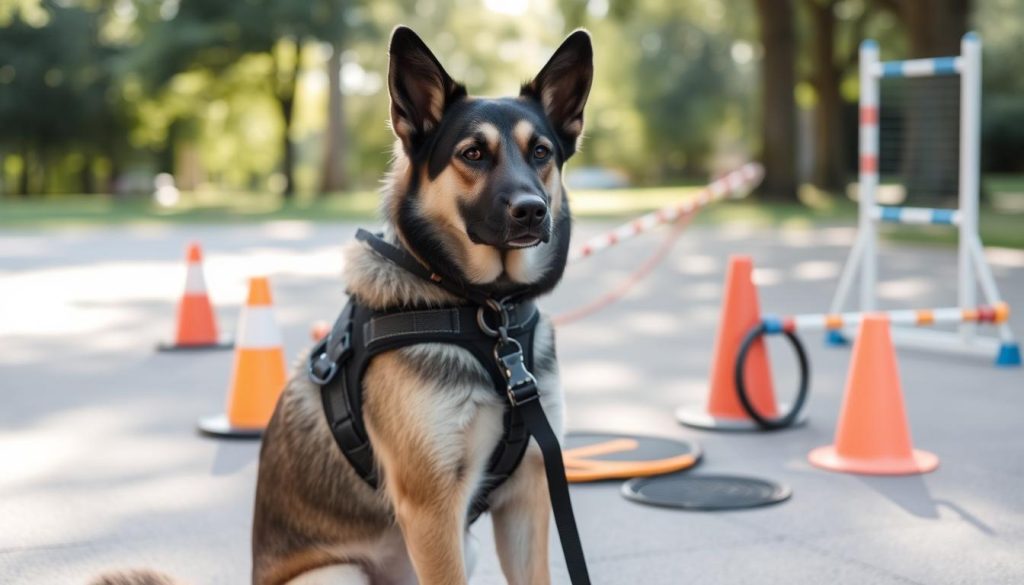
Training a service dog is a detailed process. It includes teaching obedience, social skills, and specific tasks. The aim is to build a strong bond between the handler and the dog. It also makes sure the dog can behave well in public.
Good training is key for the safety and happiness of both the handler and the dog. It’s important to use experienced trainers and organizations. This way, the service dog is ready to meet the unique needs of the person they will help.
Preparing for Service Dog Training
Before starting service dog training, it’s key to know the laws and rules. The Americans with Disabilities Act (ADA) guides service dogs. It defines their tasks and the rights of those with them.
Learning the ADA service dog rules is a must. These laws explain the tasks a service dog must do for its handler’s disability. Knowing your rights and the legal protections is crucial for a good training journey.
You might also need to look into service dog registration or certification. Some places have specific rules. Knowing the service dog laws in your area helps you follow rules and stand up for your rights.
Quick Recommendation : Our blog is filled with tips , tricks, and methods for training your dog. If you would like to attend the Free Dog Training Workshop, we recommend the K9 Training Institute.
Preparing and understanding the legal side helps you in service dog training. This knowledge lets you make smart choices, stand up for your rights, and live well with your service dog.
Selecting the Right Service Dog Breed
Choosing the right service dog breed is key to getting the help you need. You should think about the dog’s temperament, size, energy level, and if they might cause allergies. These factors are important for a good match.
Labrador Retrievers, Golden Retrievers, and German Shepherds are top picks. They are calm, easy to train, and can do many tasks. Labradors are also great for people with allergies because of their hypoallergenic coats.
When looking at service dog breed characteristics, focus on their service dog temperament. A good service dog is friendly, patient, and loves to please. Their service dog size matters too. Big dogs are good for pulling wheelchairs, while small dogs are better in tight spaces.
The best service dog breeds fit well into your life and help you a lot. By thinking about these things, you can find the perfect dog to help you be more independent and happy.
Training a Service Dog: What You Need to Know
Starting the service dog training journey is a big step. It needs patience, dedication, and special knowledge. The time it takes can vary a lot, sometimes taking months or even years.
The training includes obedience, task-specific, and public access training. These are key for a service dog’s growth.
The cost of training a service dog can change a lot. It depends on the training program and the dog’s and handler’s needs. Some programs are cheaper, while others cost more. But, it’s crucial to make sure the dog gets the right training to help their handler every day.
Going through service dog training can be both challenging and rewarding. With the right effort, you can have a well-trained service dog. This dog will offer great help and improve your life. Knowing about the training time, methods, and cost helps you make good choices. It ensures a strong partnership between you and your service dog.
Basic Obedience Training
Learning basic obedience is key for a well-behaved service dog. You need to teach them to follow commands like sit, stay, heel, and come. These commands help your dog stay calm and focused, even in busy places.
It’s also important to socialize your service dog. This means exposing them to different people, animals, and situations. This training helps your dog stay calm and focused in public, even when things get unexpected.
Consistency is crucial in basic training. By repeating commands and rewarding good behavior, your dog will learn and remember important skills. With patience and effort, you can lay a strong foundation for your dog’s future training and public work.
Specialized Task Training
Service dogs get more than basic obedience. They learn to do specific tasks to help their handlers. These tasks can be guiding the blind, alerting to seizures, or helping with balance and mobility.
Training a service dog is all about teaching them to respond to commands. For example, a dog helping someone who can’t see might learn to guide them. They can find things, alert to changes, and more.
Service dogs for people with seizures can detect when a seizure is coming. They might alert the handler or even get help. The training is customized for each handler’s needs.
Learning these tasks takes a lot of time and effort. But with the right training, a service dog can make a huge difference. Working with professional trainers helps build a strong bond and ensures the dog can assist effectively.
Public Access Training
Public access training is key for service dogs. They need to act right in places like restaurants, stores, and transportation hubs. This training helps them follow commands, behave well, and not bother others.
This training teaches dogs to stay calm in busy or new places. They learn to ignore distractions like food, noises, or other animals. They must also stay close to their handler and not jump, bark, or act out.
Knowing the service dog public access rights and laws is also important. Service dogs can go with their handlers in most public areas. With good training, they help their handlers move freely and safely, making everyone feel comfortable.
Working with Professional Trainers
Working with a professional service dog trainer can really change the game. They have the knowledge and experience needed to help your service dog. They guide you every step of the way.
They can help pick the right breed and get your dog ready for public places. They know the best training programs and schools. They also help with the cost and make sure you’re getting the most value.
Having a professional trainer is a big help. It lets you focus on bonding with your dog while they do the training. You can trust that your dog will be well-trained and ready to help you.
Conclusion
Training a service dog is a rewarding but challenging journey. It needs your full commitment and dedication. Understanding the basics of service dog training is key. This includes legal rules, choosing the right breed, and training obedience and special tasks.
Working with professional trainers can also help a lot. This way, you can better prepare a service dog to help people with disabilities.
Stay patient, persistent, and flexible during this journey. The journey might not always be easy. But seeing the positive change your service dog brings to someone’s life is worth it.
As you look back on your training journey, be proud of your progress. You’re making a real difference in your community.
The main points from this guide are to research well, get expert advice, and stay committed. With these steps, you can start this rewarding journey. You can make a big difference in someone’s life by training a service dog.
Quick Recommendation : Our blog is filled with tips , tricks, and methods for training your dog. If you would like to attend the Free Dog Training Workshop, we recommend the K9 Training Institute.